
A spammy off-site URL can show up as the “Google-selected canonical” inside the URL Inspection tool in Google Search Console, leaving site owners puzzled about why their own page is being linked to a domain they do not control. The behavior is uncommon but documented, and there is a practical way to investigate it without panicking.
What the Google-selected canonical is
When you inspect a URL in Google Search Console, Google reports the canonical it considers authoritative for that page. That value, called the Google-selected canonical, is Google’s own decision about which URL it treats as the main version, independent of any rel="canonical" hint a site owner may have added.
Sometimes the URL Google selects looks strange. In a recent case, a new client’s blog post had not yet been indexed, and yet the canonical Google reported was a URL on a spammy site. The owner had never seen this before and asked for an explanation.
Why a spammy URL can end up as the canonical
Google has acknowledged that picking an unusual canonical is hard to diagnose without the full picture. One known cause is that some domains share the same interstitial or parked page. When Google has indexed a parked page and then sees matching signals on a fresh, unindexed URL, it can treat the parked page as the canonical reference until it has enough information to do otherwise.
In other words, the new page may be a fresh blog post the site has just published, while the only matching content Google has crawled at that URL pattern is a third-party parked or interstitial page. Without stronger signals of its own, Google picks the URL it already knows about.
What to do if your URL Inspection tool shows a spammy canonical
- Wait a few weeks. Google’s selection can shift as the fresh page is crawled, indexed and associated with the site. Patience often resolves the issue on its own.
- Confirm the page is reachable. Make sure the URL returns a 200 response, loads real content, is included in the sitemap, and has internal links pointing to it. These signals help Google associate the page with your domain rather than a parked version.
- Avoid duplicating your own content across parked pages. If a syndication partner or a domain you previously controlled is now a parked page, that overlap can confuse the canonical selection.
- Post in the Google Search Central Help Community with full details if the spammy canonical persists after several weeks. Include the inspected URL, the canonical Google reports, screenshots, and the steps you have already taken.
Is this a common issue?
Unusual Google-selected canonicals do appear from time to time in URL Inspection, though a spammy off-site URL is rare. The condition is most often seen on pages that have not yet been indexed, which is also when there is the least first-party data for Google to lean on. As the page gains visibility through crawl, internal links and external references, the canonical usually resolves to the correct URL on the original domain.
How canonicalization fits into broader site health
Canonicalization is one of the items a comprehensive technical audit checks. When canonicals go wrong, traffic and indexing both suffer, so it pays to keep an eye on the canonical Google selects for your most important pages, especially after a migration or a long publishing gap. Tools like SEOScanPro run a full technical audit of a site and surface the measured result behind every check, including canonical mismatches flagged in Search Console.
FAQ
What is the Google-selected canonical in Search Console?
It is the URL that Google treats as the authoritative version of a page, based on its own analysis rather than any rel="canonical" hint a site owner has set. You can see it in the URL Inspection tool.
Why is Google picking a spammy site as my canonical?
One known reason is shared interstitial or parked pages. When Google has indexed a parked page and then crawls a fresh URL with similar signals, it can temporarily treat the parked page as the canonical until it has stronger signals from the real page.
How do I fix a spammy Google-selected canonical?
Confirm the page is live, linked internally and included in the sitemap, then wait a few weeks for Google to crawl and index it. If the spammy canonical persists, post the full details in the Google Search Central Help Community for further review.
Related coverage
Try the site audit tool
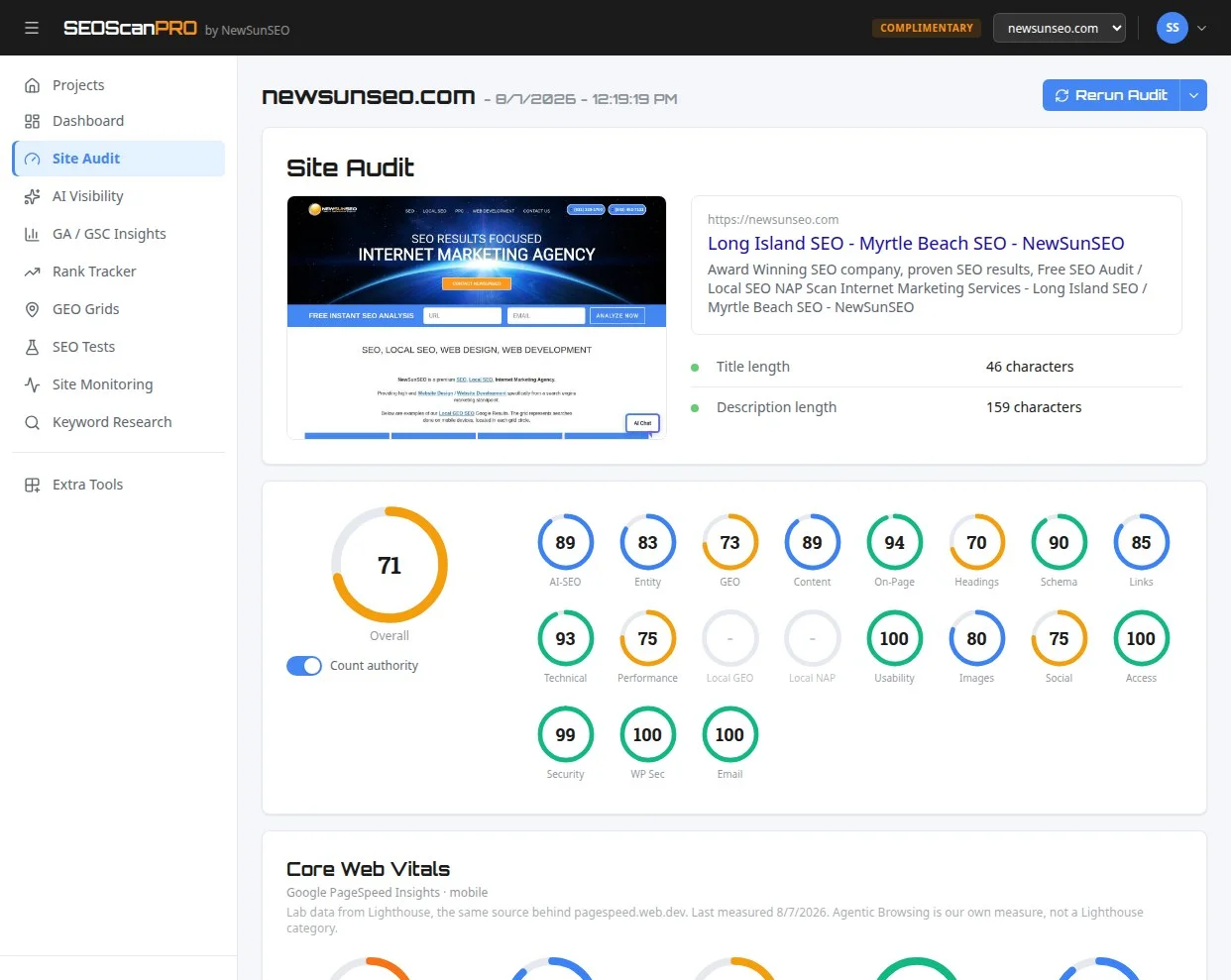
The site audit tool runs a full technical audit of a site and shows the measured result behind every check. Open the site audit tool.
This article summarizes reporting from seroundtable.com.