
Quick Answer
Local AEO (answer engine optimization) is the work that makes AI assistants like ChatGPT, Gemini, Perplexity and Google AI Mode name your business when someone asks for a local recommendation. The checklist comes down to six areas: a complete Google Business Profile, consistent directory listings, a steady flow of real reviews, a website that answers questions page by page, local mentions from your community, and a monthly check of how AI search sees you.
What Is Local AEO?
When someone asks an AI assistant for “a good plumber near me” or “the best Italian restaurant downtown”, the assistant does not show ten blue links. It names a few businesses and explains why. Local AEO is the work of making your business one of the names it picks.
The assistants build those answers from the same places people already check: your Google Business Profile, directory listings, reviews, your own website, and what other local sites say about you. Nothing on this checklist is a trick. Each item makes your business easier to understand and easier to trust, which is what both the assistants and your customers are looking for.
Work through the six areas below in order. The first three cover the facts about your business; the last three cover the proof that you are the right choice.
1. Make Your Google Business Profile Complete
Your Google Business Profile is the most complete public record of your business, and AI assistants lean on it heavily. Google AI Mode and Gemini draw on it directly.
- Claim and verify it. An unverified profile can be edited by anyone and carries less weight.
- Pick the right primary category, then add every secondary category that truly fits. Categories decide which questions you can be an answer to. Our GBP Category Audit shows which categories fit your business.
- List every service you offer, in the words customers use.
- Fill in hours, holiday hours and attributes (wheelchair access, online booking, languages spoken). “Is it open now?” and “Do they offer X?” are among the most common questions people ask assistants.
- Update it every month with photos, posts and offers, so it reads as an active business.
2. Get Your Business Details Identical Everywhere
AI assistants cross-check your business name, address and phone number across many sources. When those details match, the assistant can be confident it has the right business. When one directory has an old suite number and another has a tracking phone number, that confidence drops.
- Cover the main directories first: Google, Apple Maps, Bing Places, Yelp, Facebook and the major data aggregators that feed smaller sites.
- Then add the sites that matter in your industry, such as legal, medical, home services or restaurant directories.
- Use the exact same name, address and phone number everywhere, down to “Suite” versus “Ste”.
- Find and remove duplicate listings, which split your reviews and confuse assistants about which record is correct.
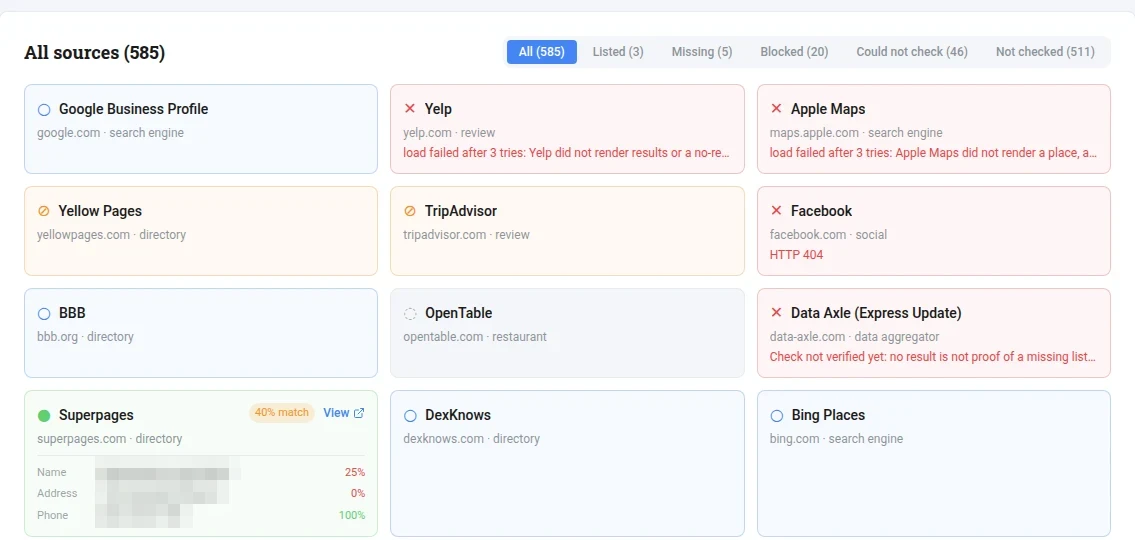
The Citations tool in SEOScanPRO checks hundreds of directories and shows field by field where your listing is missing or different, so you know exactly which ones to fix.
3. Keep Real Reviews Coming In
Assistants explain their picks, and reviews supply the reasons: “known for fast emergency service”, “customers mention fair pricing”. A steady stream of recent reviews gives them something specific to say about you.
- Ask every happy customer, every week, rather than in occasional bursts.
- Reply to every review, positive and negative. Replies show an active, responsive business.
- Encourage detail. A review that names the service, the neighborhood and what went well is far more useful than “Great job!”.
- Build reviews beyond Google on the platforms that matter in your industry, so assistants see the same reputation from more than one source.
4. Build a Website AI Can Quote
Your website is where an assistant confirms the details and finds the answer to a specific question. The goal is a site where every common question has a clear, findable answer.
- One page per service, each with its own short FAQ section answering the questions customers actually ask.
- One page per town or neighborhood you serve, with real local detail, not the same page with the city name swapped.
- A plain FAQ page covering pricing approach, service area, hours, booking and guarantees.
- LocalBusiness structured data on your site with your name, address, phone, opening hours and links to your official profiles, matching your Google Business Profile exactly.
- Key facts in the page text itself, not only in images or content that needs JavaScript to appear. Many AI crawlers read the raw page.
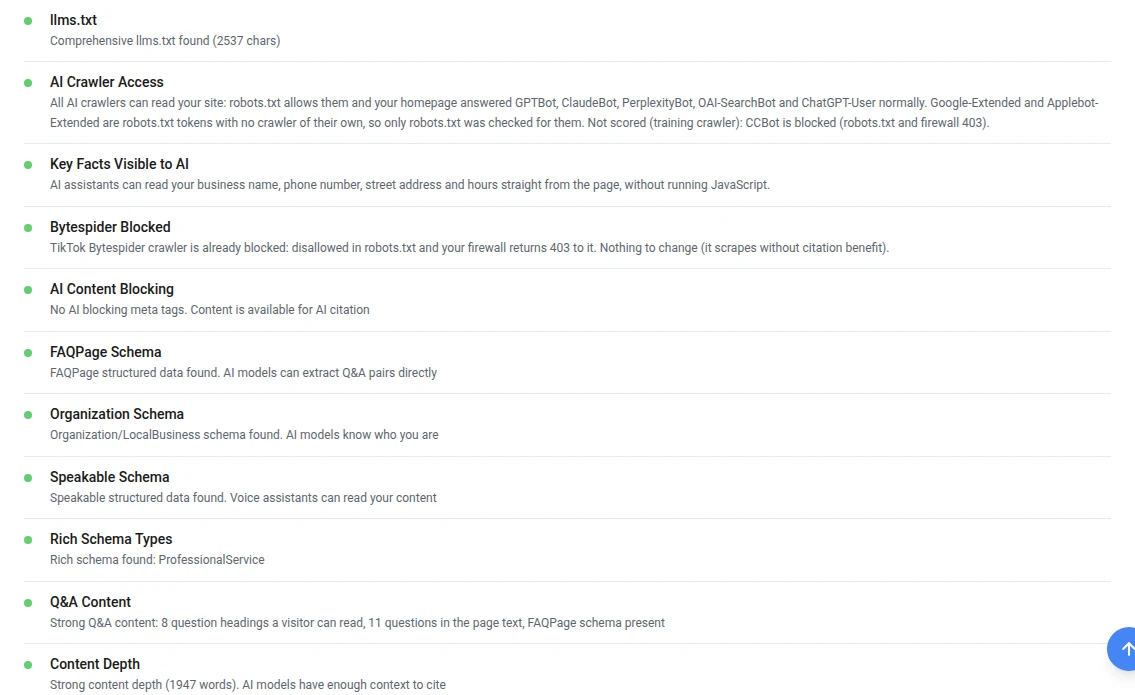
The AI Visibility checks in every SEOScanPRO Site Audit now cover the local items on this list directly: whether your schema publishes opening hours, whether the phone number and address in your schema match what visitors see on the page, and whether your schema links to your official profiles.
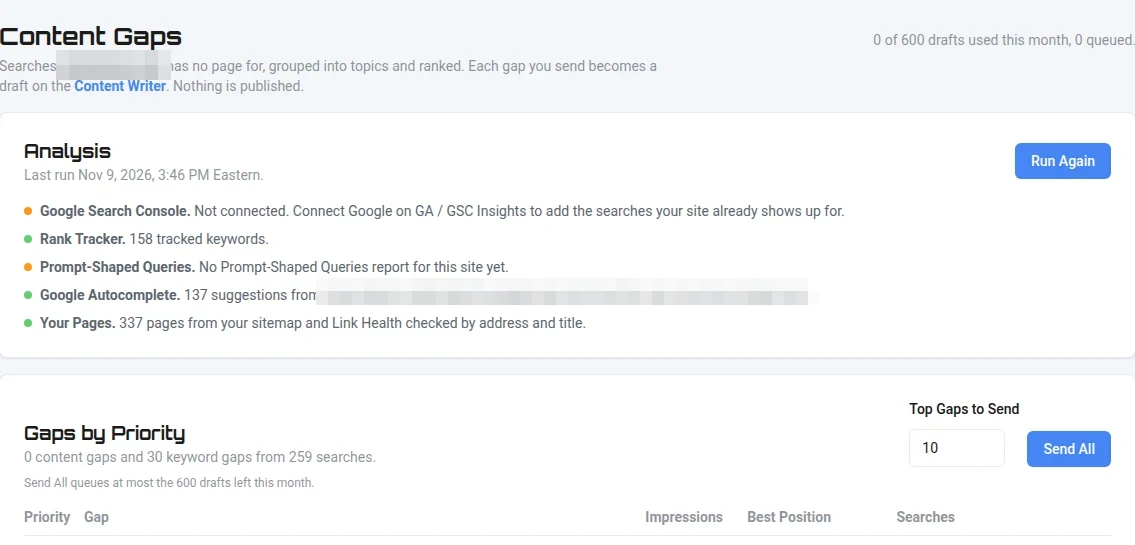
To find which service and town pages you are missing, Content Gaps compares the local searches your business could answer with the pages you already have.
5. Earn Mentions in Your Community
When local sources talk about you, assistants gain independent confirmation that you are a real, established part of the community.
- Join your chamber of commerce and local business associations, which usually list members with a link.
- Pitch local news and community sites when you have something real to share: an expansion, an anniversary, a community project.
- Sponsor local teams, events and charities that publish their sponsors.
- Partner with neighboring businesses that serve the same customers, and mention each other.
6. Check Your Progress Every Month
Local AEO is not a one-time project. Set a monthly routine.
- Ask the assistants yourself the way a customer would: “Who is the best roofer in [your town]?”, “Which dentist near [your neighborhood] takes walk-ins?”. Note whether you are named and what reasons are given.
- Track AI referral traffic in Google Analytics 4. Go to Reports, then Acquisition, then Traffic acquisition, and filter the session source for chatgpt.com, perplexity.ai, copilot.microsoft.com and gemini.google.com. Visits from Google AI Mode are counted as ordinary Google organic traffic, so they will not appear separately.
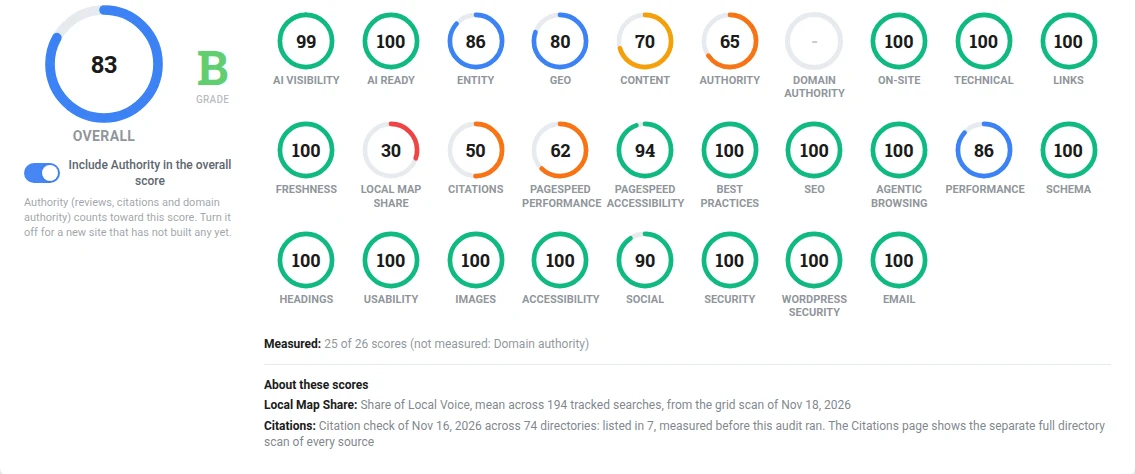
- Re-run your audit after each round of fixes, so you can see what changed.
What You Can Skip
Plenty of AEO advice adds work without adding results for a local business. You can safely put these aside:
- Sprawling schema for every possible type. Accurate LocalBusiness, FAQ and service markup covers what a local business needs.
- Being on every platform. Do the main directories and your industry’s key sites well rather than hundreds badly.
- Mass AI-written pages. Thin, repetitive pages do not earn trust from customers or assistants.
- Rewriting everything into tiny “chunks” for AI. Clear headings and direct answers are enough.
- Treating llms.txt as a priority. It is cheap to add, but it will not move local recommendations on its own.
Want to see where your business stands on this checklist today? Start with a free SEO audit, or read our Local SEO guide for the wider picture.
FAQ
What Is the Difference Between Local SEO and Local AEO?
Local SEO aims to rank your business in Google’s map pack and search results. Local AEO aims to get your business named in the answers AI assistants give. They share the same foundation of an accurate profile, consistent listings, reviews and a helpful website, so work on one supports the other.
Which AI Assistants Recommend Local Businesses?
ChatGPT, Google Gemini, Google AI Mode, Perplexity and Microsoft Copilot all answer local questions. Each draws on business profiles, directories, reviews and websites, so the checklist applies to all of them.
Do I Need Schema Markup for Local AEO?
Yes, but only the essentials. LocalBusiness structured data with your name, address, phone, opening hours and links to your official profiles, plus FAQ markup on pages with questions and answers, covers what most local businesses need.
How Often Should I Review My Local AEO?
Once a month. Update your Google Business Profile, check your listings for changes, ask the assistants your customers’ questions, and look at AI referral traffic in Google Analytics 4.
How Long Does Local AEO Take to Show Results?
It varies by business and market. Fixing listing errors and filling gaps in your profile and website are the fastest wins, while reviews and community mentions build over months.