

Google Search is now widely using google.com/goto as a passthrough URL inside its results, a layer that sits between a clicked result and the destination page. The redirect is rolling out across most residential IP providers at nearly full deployment, and it is widely seen as an anti-scraping measure aimed at third-party tools and AI companies that harvest search results at scale.
What is the google.com/goto parameter?
When a user hovers over a result in Google Search, the URL shown is no longer the direct link to the page. Instead, Google inserts a google.com/goto redirect that takes the browser through Google’s own servers before landing on the destination site. This passthrough behavior was first tested in July 2026 and is now moving toward full rollout.
The goal, based on the implementation, is to make it harder for crawlers and scrapers to read the real destination URL straight out of the SERP. Anyone collecting links, whether for rank tracking, third-party SEO tools, or AI training pipelines, now has to follow the redirect to learn where each result actually points.
How Google describes the rollout
A Google spokesperson confirmed the change is going live and said: “We have a long history of deploying technical measures against evolving forms of abuse, and we regularly take steps to protect our services and users.” The statement frames the rollout as a defensive step against scraping and other forms of automated abuse.
Why Google is doing this
The goto layer appears designed to address a specific problem: third-party tools and AI companies scraping Google Search results at scale. By replacing client-side links with server-side redirects, Google forces every scraper to actually fetch each redirect rather than parse the URL out of the HTML.
Nozzle, an SERP tracking provider, shared data showing the share of Google result pages that return only goto links has climbed sharply over roughly four months of testing. A representative from the company noted on X that “the goto links can’t be decoded, so providers will have to follow the redirect links. While that works in small scale tests, Google seems likely to make that tough, since each SERP will have hundreds of links to decode.”” In practice that means a much higher cost per page scraped, which can price out smaller operators and slow down larger ones.
The timing matters. Google has an ongoing legal fight with SerpApi over search result scraping, and the company has said the case is proving difficult to win in court. Hardening the link layer is a practical workaround that does not depend on the litigation outcome.
What changes for users
For everyday searchers, the change is invisible. Clicking a result still lands on the right page; the redirect simply runs through Google’s servers first. Page load is not meaningfully slower, and the destination URL in the address bar is unchanged once the redirect completes.
For anyone building or buying third-party SEO and AI visibility tracking tools, the cost of fetching and decoding Google results just went up. SERP rank trackers, AI citation monitors, local grid ranking reports, and competitive analysis platforms all depend on parsing result URLs at scale. With goto, those tools now have to resolve every redirect, which raises compute costs, slows coverage, and risks incomplete data if redirects are rate-limited or blocked.
Tools that need to understand how a site appears in search across many locations will be hit especially hard. Rank position mapped across a whole service area, where every check produces dozens of results per page, is exactly the kind of workload the new redirect layer is designed to slow down. Services that run that level of measurement are part of what SEOScanPro‘s GEO Grids are built to handle, but any tool in the space now has to plan for the new redirect cost.
Will third-party tools adapt?
Almost certainly. Every previous anti-scraping change Google has shipped, from rate limits to CAPTCHAs to JavaScript challenges, has eventually been worked around by well-resourced providers. The question is how long the workaround takes and how much it costs.
Following redirects works in small-scale operations. At Google scale, where a single SERP carries hundreds of links and a rank tracker may want to refresh every five minutes across thousands of keywords, the combined cost of fetching every redirect can become prohibitive. That is the practical pressure Google is applying, and it is the part third-party tools will feel first.
What to watch next
The rollout is broad but not yet universal. The share of result pages returning only goto links has been climbing for roughly four months and is now near full deployment across the residential IP providers measured. If the rollout reaches near 100% and stays there, scraping costs across the SEO and AI tooling industry will rise measurably over the coming weeks.
For businesses that depend on third-party rank tracking or AI citation monitoring, the practical step is to ask any vendor how they are handling the new redirect layer and what their refresh cadence looks like now. Tools that already followed redirects at scale will keep working; tools that parsed URLs directly will be the ones to slip.
FAQ
What is google.com/goto in Google Search results?
It is a passthrough URL Google now inserts in place of direct result links. Clicking a result routes the user through google.com/goto before landing on the destination page, and the real destination URL is not exposed in the search results HTML.
Why is Google adding the goto parameter?
Google describes it as a technical measure against scraping and other automated abuse. The redirect makes it harder for third-party tools and AI companies to harvest real destination URLs directly from search results, since they now have to follow each redirect to learn where a link points.
How does this affect SEO and AI tracking tools?
Tools that parse result links directly now have to fetch every redirect, which raises compute costs and can slow coverage at scale. SERP rank trackers, AI citation monitors, and local grid ranking reports are the categories most affected, while everyday users see no meaningful change in how search works.
Try the geo grid tool
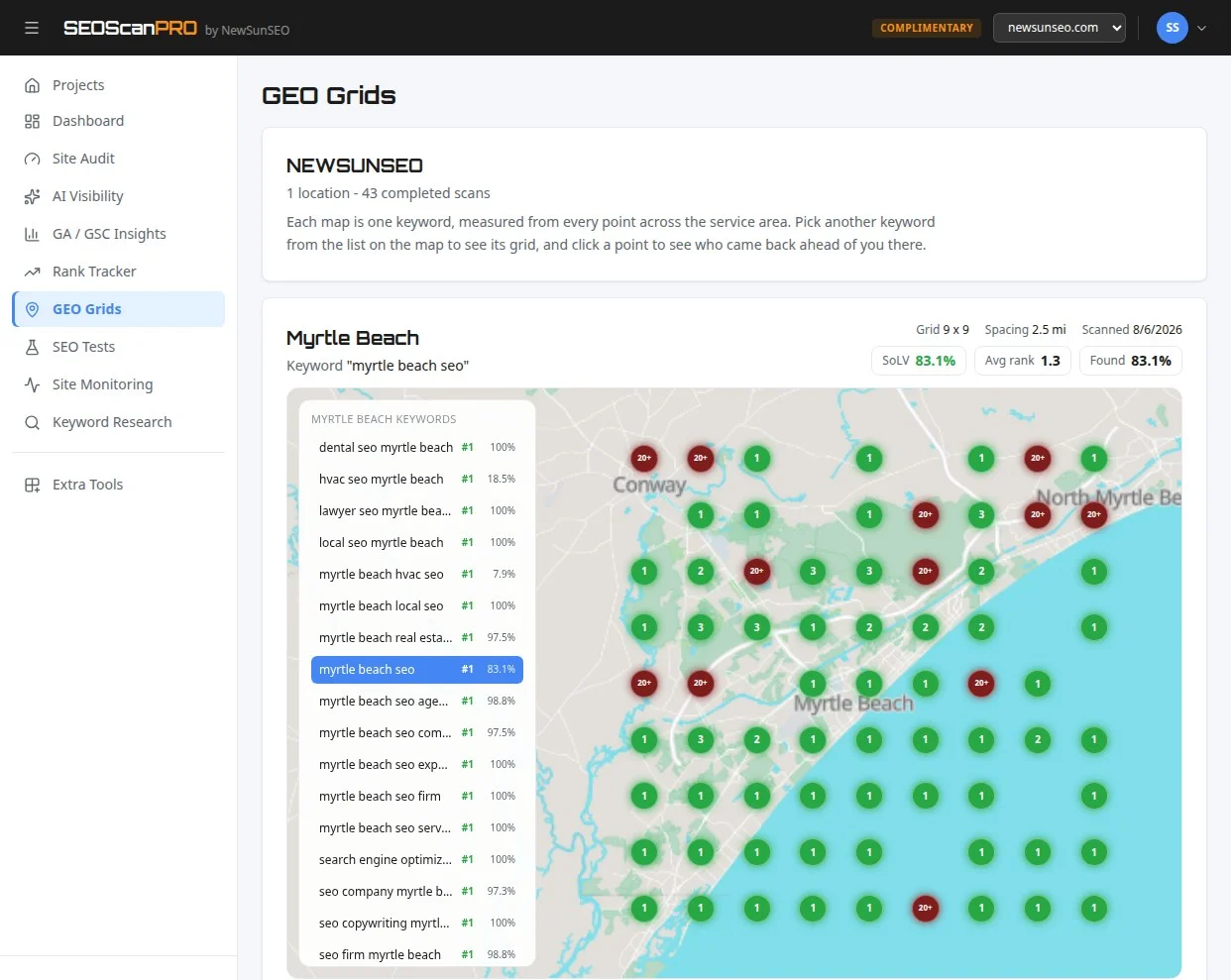
The geo grid tool runs a full technical audit of a site and shows the measured result behind every check. Open the geo grid tool.
This article summarizes reporting from seroundtable.com.