
A deliberate internal linking strategy gives both users and crawlers a clear signal about which pages on a site matter most. Poor internal linking leaves orphaned pages, redirect chains, and pages buried too deep in the structure, all of which reduce a site’s visibility in search and in AI-driven results.
What are internal links?
Internal links are hyperlinks that lead users to other pages on the same website and help search engines and AI crawlers understand a site’s structure.
Types of internal links
Internal links fall into two groups: structural links, which stay the same across a site, and contextual links, which change with the content.
Types of structural links include:
- Navigational links: appear in the site’s main menu.
- Footer links: placed in the site’s footer area.
- Breadcrumb links: show a page’s location within the site hierarchy.
- Sidebar links: located in the sidebar for easy navigation.
Types of contextual links include:
- Call-to-action links: prompt conversions or actions within the text.
- Image links: hyperlinked images.
- In-content links: links within content like blog posts and web pages.
Internal links vs. external links
Internal links direct users from one page of a site to another page within the same domain, as opposed to external links, which point from a site to a page on another domain. Internal links improve navigation, pass link authority among pages, and help bots crawl the site.
External links cite references and add context from other domains. When those domains are reputable, the links build trust and authority. Backlinks from other sites to your pages can raise domain authority and rankings.
Why are internal links important for SEO?
Internal links help search engines, AI search platforms, and users navigate a site, and they pass authority to weaker pages.
Search engines crawl internal links to map the relationships between pages on a site, and that map helps Google decide which pages sit at the top of the site’s hierarchy. Link equity that flows through those paths can lift the rankings of pages that would otherwise have little authority.
AI search platforms retrieve and cite passages rather than whole pages. When cluster pages consistently point to one pillar, that pillar becomes the page most likely to get cited as the source on that topic.
Users follow internal links to related pages on the same site, which can increase time on site and add pages per session before a conversion.
1. Internal links help search engines understand a site’s structure
Google’s crawlers discover pages by following internal links. Google’s own documentation states that some pages are known because Google has already visited them, while others are discovered when Google extracts a link from a known page to a new page.
2. Internal links pass authority
Internal links pass authority to other internal pages. A page that earns many backlinks, and thus has higher authority via PageRank, can strengthen other pages through internal links. Only part of that authority is passed, and contextual relevance matters: links are most effective when they are aligned with user needs and content topics.
3. Internal links help users navigate between relevant pages
Internal links encourage visitors to navigate to related pages, extending the time they spend on the site and raising the chance they complete an action such as a purchase or a form submission.
How to build an internal linking strategy
Start with site structure, then place links on individual pages.
1. Plan the site structure
Planning the site structure means deciding how content is organized and linked so users and search engines can follow a clear hierarchy, and a pyramid-like layout often works best, with the homepage at the top, category pages in the middle, and individual posts at the base.
- Top: homepage or main pillar pages.
- Middle: subcategories or cluster pages.
- Bottom: specific content pages.
This pattern is often called hub-and-spoke: the homepage or pillar acts as the hub, and the pages below are the spokes that link back up. Silo structures take the same hierarchy and keep each topic’s pages linking mostly within their own category. The shared goal is keeping the most important pages just a click or two from the homepage, with supporting content grouped into clear topics rather than scattered across unrelated categories.
2. Identify pillar pages
Pillar pages are comprehensive resources that cover a broad topic and link to more specific cluster pages to strengthen the site’s structure. Pillar pages help build topic clusters, which are groups of related content. Pillar pages often target broad, high-volume keywords and sit near the top of the marketing funnel, providing general information that sparks interest. For a retail site, a pillar page for washing machines might link to sub-pages about specific washing machine types, which then link to even more specific product categories. Avoid making pillar pages too narrow. There needs to be enough cluster pages to support them.
3. Create topic clusters
Topic clusters expand on the pillar topic in more detail, with each cluster linking back to the pillar to reinforce topical relevance. For a copywriting pillar, clusters might cover what copywriting is or email copywriting tips. Clusters can include sub-pages, for example, an email copywriting cluster might include pages on subject lines and CTAs, and those should link back to the main pillar page.
This structure also serves AI search platforms well. When a system breaks a query into related sub-questions, a process called query fan-out, a pillar-and-cluster structure signals which page holds the deepest, most authoritative coverage of the topic. Clusters get messy without planning, so the practical first step is mapping them out and listing relevant supporting pages in a spreadsheet.
4. Use authority pages to pass link equity
Authority pages are pages with high-quality backlinks, and they pass link equity to the pages they link to. To use them effectively, identify the highest-authority pages on the site, then add internal links from those pages to less authoritative pages on relevant topics. A standard workflow is to export the top referring-domain pages into a strategy document, then add internal links from those pages to weaker pages that need a boost.
3. Support new content
New pages have few backlinks of their own, so internal links are what get them discovered and ranked. To start, pick a new piece of content or a page that needs better performance, then look for relevant interlinking opportunities. A practical method is to use a site: search operator to find pages that mention the target keyword, collect those URLs into a strategy document, and add links from each one to the new page. Google Search Console’s Links report also shows which existing pages already discuss related topics, giving another way to surface candidates. A common target is at least two or three internal links pointing to every new piece of content.
6. Choose the right anchor text
Choosing the right anchor text, the clickable text in a hyperlink, helps search engines and AI search platforms identify what the linked page is about. Unlike backlinks, internal anchor text is entirely under the site’s control. Good internal anchor text is brief, ideally five words or fewer, relevant rather than vague like click here, and optimized. Exact-match anchor text is acceptable for internal links when it is relevant; keyword stuffing is not. Internal links should be followed by default so search engines pass authority through them. The rel=”nofollow” attribute is reserved for low-value utility pages like login or cart pages, since it tells search engines not to pass authority through that link.
7. Add navigational links
Navigational links make it easier for bots and users to find the most important pages. They are among the most important internal links because they appear permanently across the site in the top menu, sidebar, or footer. This main navigational structure usually features product categories, services, or core content topics.
Getting navigation right comes down to two things: staying consistent and staying visible. Keep the menu consistent across pages. If the menu changes from page to page, bots and users lose the map they have built of the site. Keep the nav crawlable. AI crawlers do not execute JavaScript the way Google does, so if the menu renders via JavaScript, which is common with dropdowns and hamburger menus, most AI crawlers will not see it at all. Test that the nav appears in view-source, not just in the rendered page. Once the nav is consistent and crawlable, prioritize navigational links to the most important pages and let relevance set the number everywhere else. A few links that help a reader get somewhere useful beat a crowded set that does not.
Auditing a site’s existing internal links
Auditing existing internal links helps map the current site structure so issues can be identified and fixed. A site audit can surface common problems like broken internal links or pages with no internal links. Below are nine common internal linking mistakes, how to find them, and how to fix them so a site does not lose visibility in search and AI.
1. Broken internal links
Broken internal links direct users and crawlers to pages that do not exist. Deleted pages and mistyped URLs often cause these errors. They return 404 errors and pass no authority. In a site audit tool, the Internal Linking report under Thematic Reports lists broken links in the Errors section. The fix is to remove or replace each link with a valid link that points to a live page.
2. Too many internal links on a page
Having too many internal links on a page can make it harder for crawlers to determine which ones matter, since hundreds or thousands of links on a single page dilute signals about which pages the page author considers most important. Fewer, more targeted links typically give users a clearer path through the site.
FAQ
What are internal links?
Internal links are hyperlinks that lead users to other pages on the same website. They help search engines and AI crawlers understand a site’s structure and they pass authority between pages.
Why are internal links important for SEO?
Internal links help search engines understand how pages on the same domain relate to each other and pass authority from stronger pages to weaker ones.
What is the difference between internal and external links?
Internal links point from one page of a site to another page on the same domain. External links point from a site to a page on a different domain. Internal links aid navigation and distribute link equity; external links build credibility, authority, and referral traffic.
Try the site audit tool
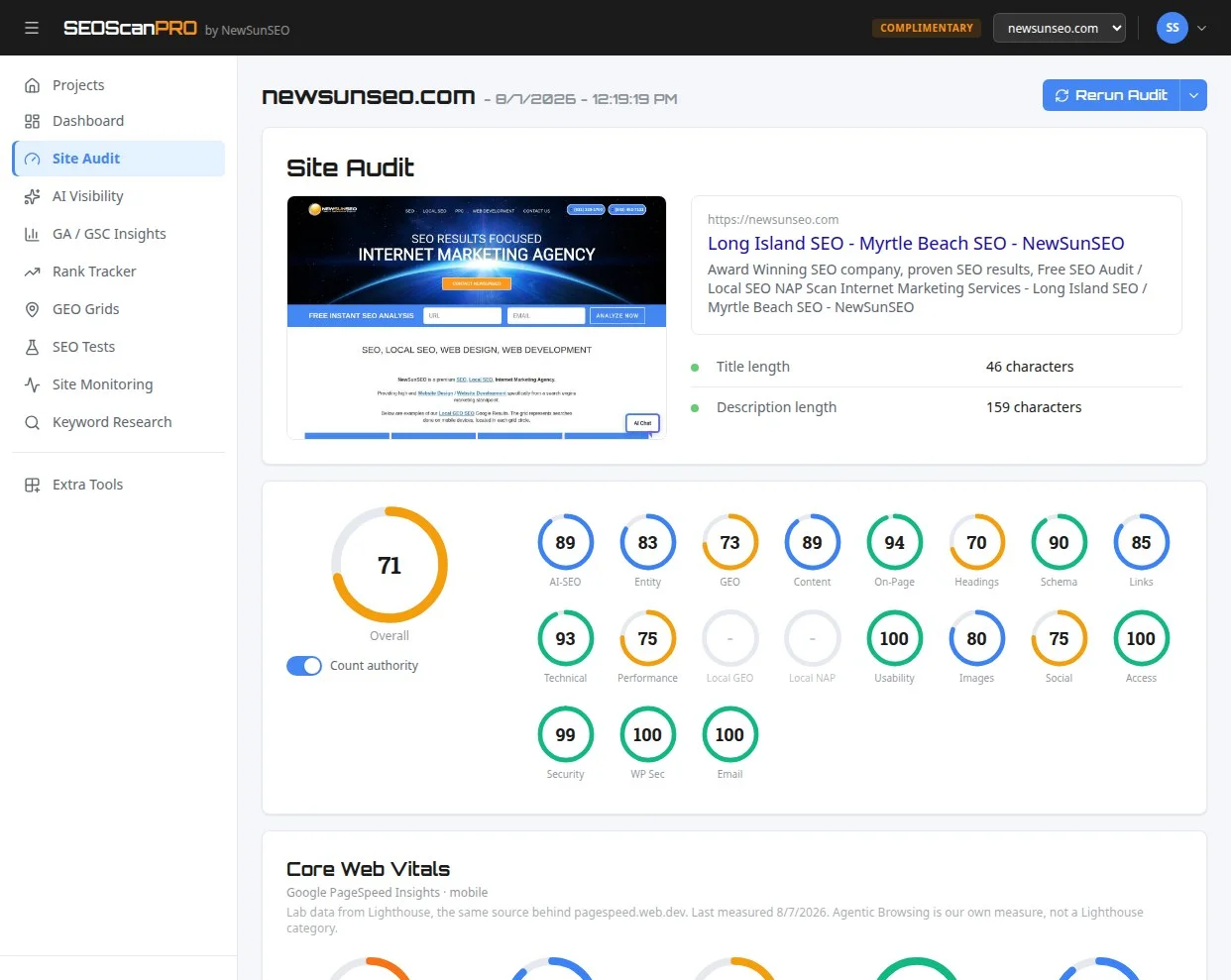
The site audit tool runs a full technical audit of a site and shows the measured result behind every check. Open the site audit tool.
This article summarizes reporting from semrush.com.