
SEO teams get an early read on a possible Google update when Search rankings shift hard across regions, and that signal is flashing on the morning of September 15, 2026. Chatter inside the SEO community spiked within hours, multiple rank-tracking tools jumped in unison, and site owners are watching traffic and conversions swing on a 4 PM cutoff that has now repeated for two days running.
What follows is a plain breakdown of what SEOs are reporting, what the volatility tools are plotting, and the patterns that make this event look like the opening of a confirmed Google ranking update rather than routine noise.
What SEOs are seeing across Google Search
Reports from SEOs and site owners describe the same picture: large keyword sets reshuffling, sudden drops in Google traffic around 4 PM the prior day, and Discover traffic turning soft again on the morning of September 15. UK results are drawing the loudest complaints, with several respondents calling them “poor,” “crazy,” and “chaotic” since Saturday night.
Common themes inside the chatter:
- Mass ranking movements in UK Google Search results, not limited to a single niche or vertical.
- Page 1 reportedly showing more spam and irrelevant AI Overview answers than usual.
- New keyword sets replacing older ones, with pages that used to rank now buried and previously unseen pages taking their slots.
- Google organic traffic and Google Ads conversions both cutting off at 4 PM the previous day, then staying weak into September 15.
- Discover feed turning chaotic again after a brief weekend recovery.
- Top Stories surfacing news articles more than two months old, an unusual recycling pattern in a single niche.
- AI Overviews pulling in content that multiple SEOs describe as irrelevant.
One respondent summed up the scale by noting that a reshuffle of this size, where an entirely new keyword set replaces the old one, only happens on large Google updates.
What the volatility tools are showing
Rank-tracking dashboards that measure day-over-day movement in Google Search results are lighting up at the same time as the community chatter. Several of the well-known SERP volatility indices posted higher scores on September 15 than they had in the prior week, which is consistent with the early hours of a ranking update before the broader signal fully lands.
The aggregate volatility reading on the morning of September 15 climbed sharply after a quieter stretch around September 12 and 13, echoing the same pattern SEOs described in WebmasterWorld threads. Not every tool reacted in lockstep, which is normal during the first hours of a possible update; some indices tend to lag the chatter because they sample on a fixed schedule.
The tracked tools include AccuRanker, Algoroo, AWR, CognitiveSEO, DataForSEO, Mangools, Mozcast, SEMRush, Serpstat, SimilarWeb, Sistrix, Wincher, Wireboard, and Zutrix, all plotted on a single shared timeline. Aggregate lines pulled from those feeds are the cleanest early indicator, since they smooth out the noise that any single tool can introduce.
Where this fits in the September pattern
This is not the first swing of the month. SEOs also reported weirdness in Google Search rankings between September 4 and September 12, with multiple short bursts of movement rather than one clean event. The September 15 spike looks like the sharpest of those bursts so far and lines up with what trackers describe as the start of a new update wave.
Two useful framings for site owners and SEOs right now:
- Short, repeated volatility bursts across two weeks point to iterative ranking changes rather than a single sweeping algorithm. That pattern usually favors sites with stable technical health and steady content signals.
- A 4 PM cutoff that hits organic and paid traffic at the same moment suggests a system-wide ranking or quality adjustment, not a per-site penalty, since ads and organic results shifted together.
What to do while rankings are in motion
The first 48 hours of a volatility spike are the worst time to draw conclusions about any single page. Rankings often overshoot in both directions, AI Overview inclusions can churn without warning, and the same keyword can return three different page-1 sets in a single morning.
A short checklist that holds up across volatile windows:
- Hold ranking changes for 3 to 5 days before rewriting titles, pruning content, or disavowing links. The September 15 spike will likely settle into a clearer shape by the end of the week.
- Watch Search Console daily rather than third-party rank trackers, since Search Console reflects clicks and impressions on the actual Google Search results page rather than sampled SERP scrapes.
- Separate AI Overview movement from classic blue-link movement when triaging. AI Overviews pull from a different retrieval pass and can change independently of the underlying organic rankings.
- For sites hit by the 4 PM traffic cutoff, check that the drop is uniform across countries and devices before treating it as a site-specific issue. The chatter pattern is global, not isolated.
- Track which pages have held position across September 4, 9, and 15. Those are the templates to scale, since they survived three separate volatility bursts.
Rank position across a service area is what a geo grid report shows, and SEOScanPro’s GEO Grids plot this kind of regional volatility directly on a map, so a site can see which towns and suburbs moved and which stayed steady through the September swings.
How to read the chatter versus the tools
Chatter and trackers tend to disagree for the first few hours, then converge. SEOs posting in WebmasterWorld usually feel movement first because they watch their own dashboards all day; the public volatility indices sample results on a schedule and update on a delay. When both light up at the same time, as they did on the morning of September 15, the signal is usually real and usually points to a Google ranking update rather than a localized bug.
Three signals worth weighting most during this kind of spike:
- The aggregate line on multi-tool charts, since it cancels out the bias of any single provider.
- Reports of new keyword sets replacing old ones, because that pattern shows up when ranking models, not just individual results, have shifted.
- A shared cutoff time across organic and paid traffic, which points to a system-level change in how Google surfaces results and ads.
FAQ
Is there a Google update on September 15, 2026?
Google has not confirmed an update as of the morning of September 15, 2026. SEO chatter spiked, multiple rank-tracking tools posted higher volatility scores, and site owners reported mass ranking movements, which together look like the opening of a Google ranking update. Confirmation usually follows a few days later if at all.
Why are UK Google Search results so volatile right now?
Multiple SEOs reported that UK Google Search results look “poor” and “crazy” starting Saturday night, with mass keyword reshuffles, more spam on page 1, and irrelevant AI Overview answers. The UK is showing the loudest signal in the chatter, but similar movement is being reported in other regions.
What should I do if my Google traffic dropped on September 15?
Hold off on major site changes for 3 to 5 days while the volatility settles. Check Google Search Console for the actual click and impression pattern, separate AI Overview movement from classic blue-link movement, and confirm the drop is uniform across countries and devices before treating it as a site-specific issue.
Try the geo grid tool
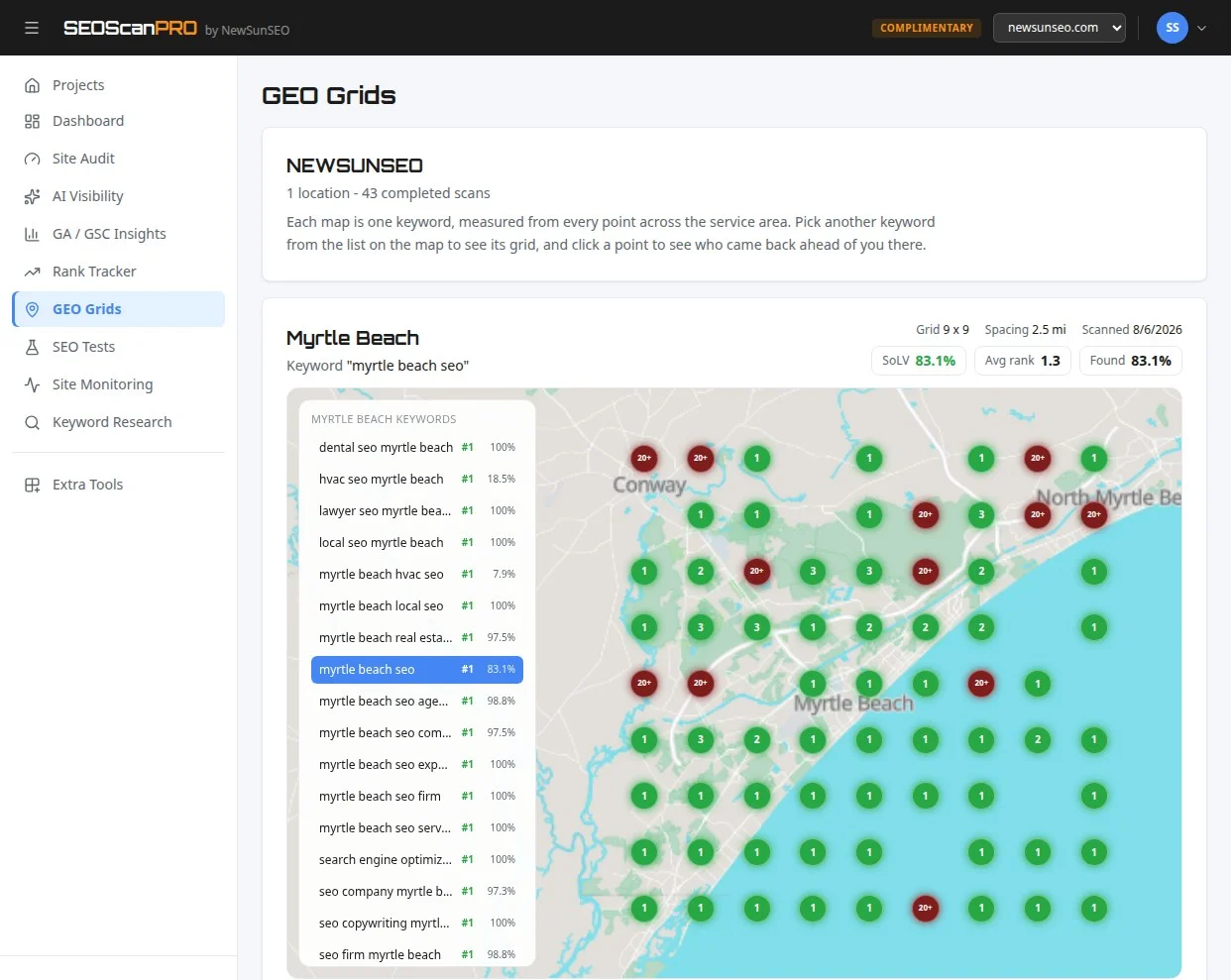
The geo grid tool runs a full technical audit of a site and shows the measured result behind every check. Open the geo grid tool.
This article summarizes reporting from seroundtable.com.