

Ranking well in Google’s generative AI responses in Search comes down to the same SEO fundamentals publishers already use. Google has stated publicly that there is no separate checklist, no different tactic, and no special tooling required to appear in AI-generated answers inside Google Search.
What Google Said About AI Response Optimization
A senior figure within Google’s Search organization addressed the question directly in a social media post, writing, “from our POV there’s nothing really special you need to do for generative AI responses in search.” The comment acknowledged some uncertainty about the exact question being asked, yet aligned with Google’s previously published guidance on the same subject.
Google Has Repeated This Position Before
This is not the first time Google has told publishers that traditional SEO is the path into AI-generated answers. Past public statements from Google’s search communications and search relations teams have framed Answer Engine Optimization (AEO), Generative Engine Optimization (GEO), and SEO as the same discipline under different names. Coverage of those statements has appeared on Google’s own Search Central channels, including myth-busting guidance on optimizing for generative AI and direct explanations that SEO for AI is the same work as SEO for traditional search results.
What That Means For Publishers And SEOs
The practical implication is that the work already going into a site, including technical SEO, on-page optimization, helpful content, structured data, and authority signals, is the work that surfaces content inside AI Overviews and other generative features in Google Search. Adding a separate AI-optimization layer, rewriting copy into “bite-sized chunks” specifically for AI, or buying AI-optimization tools marketed as a distinct category is not recommended by Google.
Google has actively discouraged publishers from fragmenting their content into short passages aimed at AI extraction, pointing out that this approach hurts readers and does not improve visibility inside AI-generated responses.
Does Every Search Engine Agree?
Microsoft Bing has publicly taken a different position. Bing has published guidance suggesting that publishers should approach optimization for its AI-influenced results differently than traditional web ranking. Google’s stance, by contrast, treats generative responses as a natural output of the same ranking systems that power standard search results.
Where This Leaves The Industry Debate
The split between Google and Bing on whether generative AI optimization is a separate discipline has kept the debate alive across the search community. Google’s consistent answer is that there is no second playbook. Publishers who already invest in clean technical SEO, useful structured data, and high-quality content are doing the work that matters for AI-generated answers in Google Search.
FAQ
Does Google require separate optimization for generative AI responses?
No. Google has stated publicly that there is nothing special publishers need to do for generative AI responses in Search, and that the same SEO practices used for traditional ranking apply.
Is AEO or GEO the same as SEO according to Google?
Yes. Google has repeatedly said that Answer Engine Optimization (AEO), Generative Engine Optimization (GEO), and SEO are the same discipline and do not require separate tactics.
Should content be rewritten into short chunks for AI search?
No. Google has warned against turning content into bite-sized chunks specifically for AI extraction, noting that this approach does not improve visibility in AI-generated answers and hurts readers.
Try the site audit tool
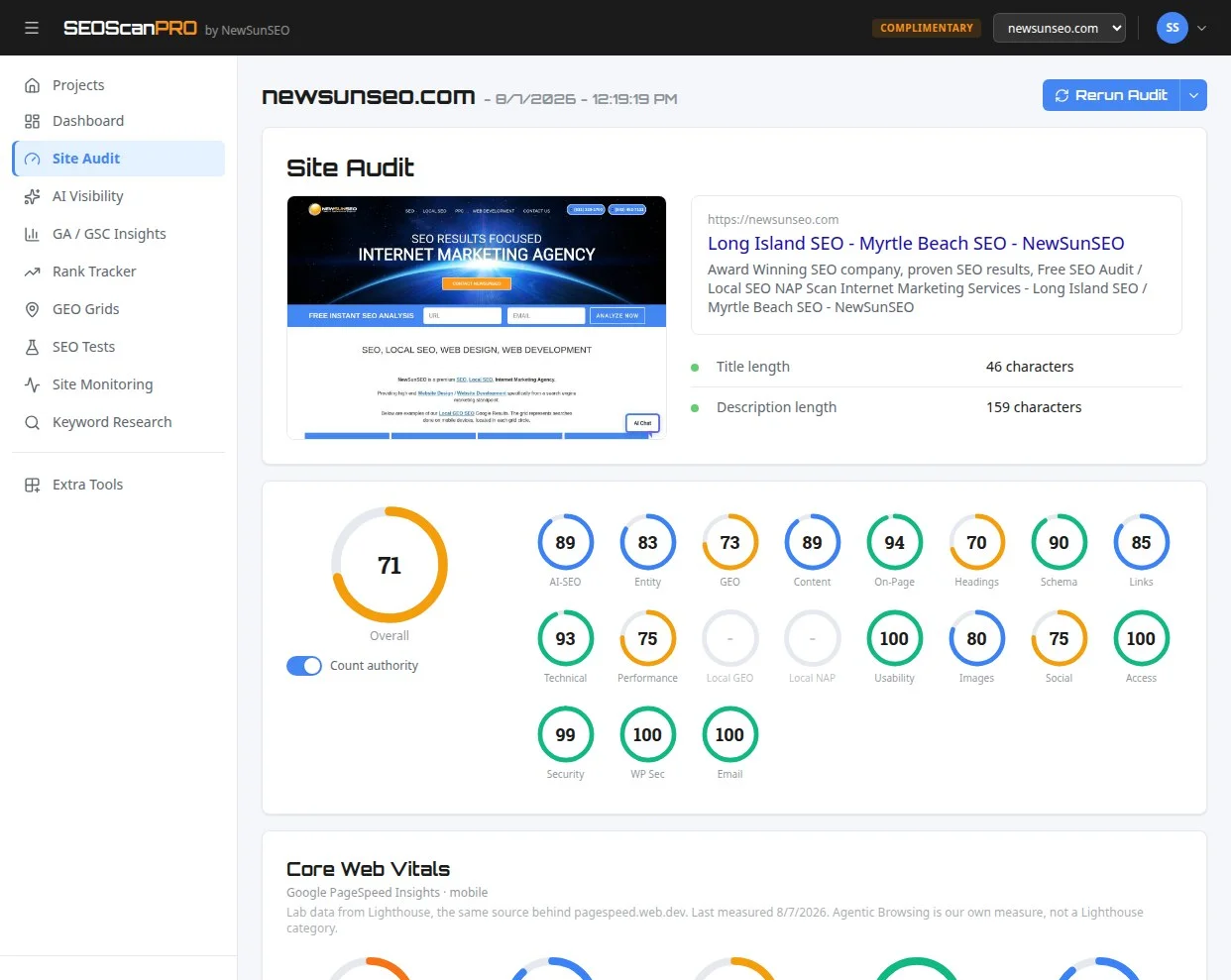
SEOScanPro runs a full technical audit of a site and shows the measured result behind every check. Open the site audit tool.
This article summarizes reporting from seroundtable.com.