

Website owners may want to review their own pages whenever Google updates its spam systems. Rajan Patel, VP of Engineering for Google Search, confirmed on X that the Search team is still well resourced in its fight against spam, responding shortly after the August 2026 spam update finished rolling out. SE Ranking data reported by Search Engine Land measured an 82% increase in URLs dropping out of Google's top 100 during that update.
What Google confirmed about its spam team
After the update rolled out, a question circulated among SEOs about whether Google had shifted staff away from search quality toward its Gemini work, which some took as the reason certain scaled, programmatic sites were still ranking. Rajan Patel, VP of Engineering for Google Search, answered that on X. Asked whether the spam team was still well resourced, he replied, "Yes it is."
Google launched the August 2026 spam update on August 18 and completed the rollout on August 21, affecting search results globally. The spam team continues to update its spam algorithms to reduce spam in search results.
How far did the August 2026 spam update move rankings?
The measurement came from SE Ranking, whose data was reported by Search Engine Land. During the update, 16.71% of URLs that had ranked in Google's top 10 fell beyond position 100 for the same keyword, compared with 9.2% during a similar five-day period in July. That works out to an 82% increase in top 10 URLs being pushed out of the top 100, and it made a top 10 URL about 1.8 times more likely to disappear from the top 100 during the update.
SE Ranking analyzed U.S. organic Google results for the same 100,000 keywords across 20 industries, comparing rankings from August 17 and August 22, immediately before and after the update, against a July 26 to July 31 baseline when Google had no confirmed ranking update. SE Ranking also recorded a 12% increase in the share of URLs ranking in the top 3 after the update that had not cracked the top 20 before it.
The volatility reached every niche SE Ranking tracked. Top 10 volatility ranged from 74.64% in real estate to 85.55% in fashion and beauty, and the YMYL categories, including real estate and healthcare, were among the steadiest. SE Ranking tracked only positions 1 through 100, so the data does not show whether the URLs that vanished were deindexed or simply fell below position 100, and it does not explain why those specific pages lost rankings.
Mordy Oberstein from SE Ranking wrote on X, "This, to me, sums up the recent Google spam update the best…. the 82% increase in Google kicking URLs out of the top 100. (Because this is a spam, not a core update)."
Which sites lost visibility?
SE Ranking's dataset did not break results down by site type, content, or spam tactic, and it did not run a URL- or domain-level analysis of the pages that lost rankings or the ones that replaced them. The visible examples came from individual site tracking. An SEO analyst who tracks spam updates documented a site scaled to roughly 1.3 million URLs losing significant visibility on August 24, 2026, describing it as "heavily programmatic." The same analyst recorded another drop for a site with close to 250,000 indexed URLs after the update.
What a site audit would flag
Site audits can help you review your own pages. For a site that leans on templated or mass-generated pages, these are the general patterns worth checking:
- Groups of very similar pages generated from a single template.
- Whether pages add their own information instead of repeating existing content.
- Whether the total page count is matched by a similar depth of unique content.
- Whether pages are written to answer a reader's question rather than to target keyword combinations.
A technical audit is one way to review your own pages. SEOScanPro runs comprehensive website SEO audits, including on-page analysis.
What to do now
- Pull your indexed page count and compare it to the pages you intentionally created. A large gap is worth investigating.
- Review your biggest templated sections for pages that add no unique information, and consolidate or remove them.
- Track rankings on your core keywords across the update window, so you can see any move from the top 10 to beyond position 100.
- Do not assume your niche was spared. SE Ranking found volatility across all 20 industries it tracked, so check even if traffic looks stable.
- Favor original, page-by-page content over scaled generation before the next spam update rolls out.
FAQ
What did Google confirm about its search spam team?
Rajan Patel, VP of Engineering for Google Search, confirmed on X that the Search team is still well resourced in its fight against spam. He replied "Yes it is" shortly after the August 2026 spam update finished rolling out, and the team continues to update its spam algorithms.
How much did the August 2026 spam update affect rankings?
SE Ranking data reported by Search Engine Land showed an 82% increase in top 10 URLs dropping beyond position 100. During the update, 16.71% of top 10 URLs fell below position 100, compared with 9.2% in a similar July period, making a top 10 URL about 1.8 times more likely to disappear from the top 100.
What kind of sites were hit by the August 2026 spam update?
SE Ranking did not analyze results by site type, so there is no dataset-level breakdown. Individual tracking documented large programmatic sites losing visibility, including one scaled to about 1.3 million URLs and another with close to 250,000 indexed URLs.
Try the site audit tool
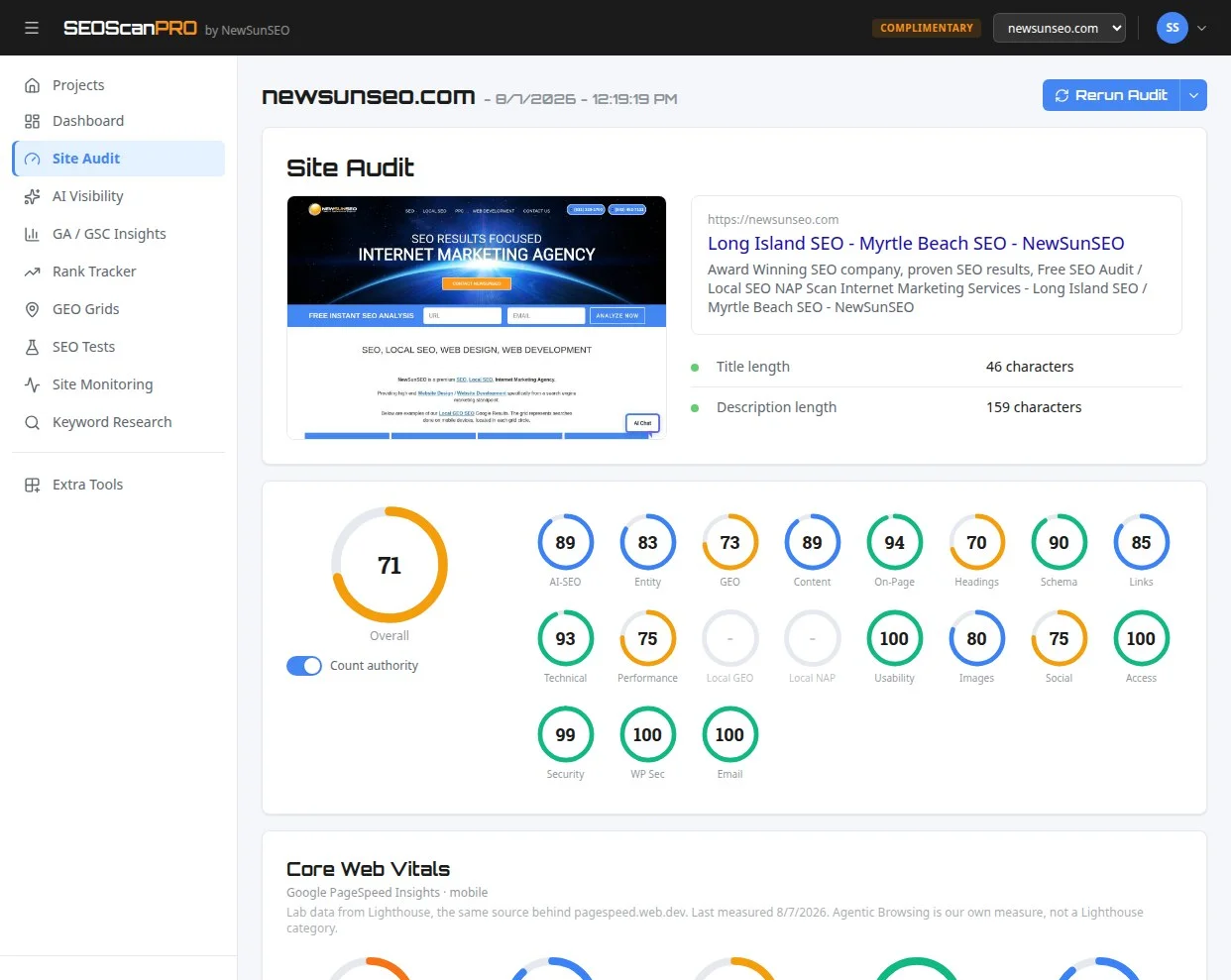
SEOScanPro runs a full technical audit of a site and shows the measured result behind every check. Open the site audit tool.
Sources
- Google Confirms Search Spam Team Is Fighting & Well Resourced, seroundtable.com, Aug 31, 2026
- coalitiontechnologies.com
- Google’s August 2026 spam update hit rankings harder than normal, searchengineland.com, Aug 27, 2026
- coalitiontechnologies.com
- Daily Search Forum Recap: August 31, 2026, seroundtable.com, Aug 31, 2026
- gendigital.com
- searchenginejournal.com