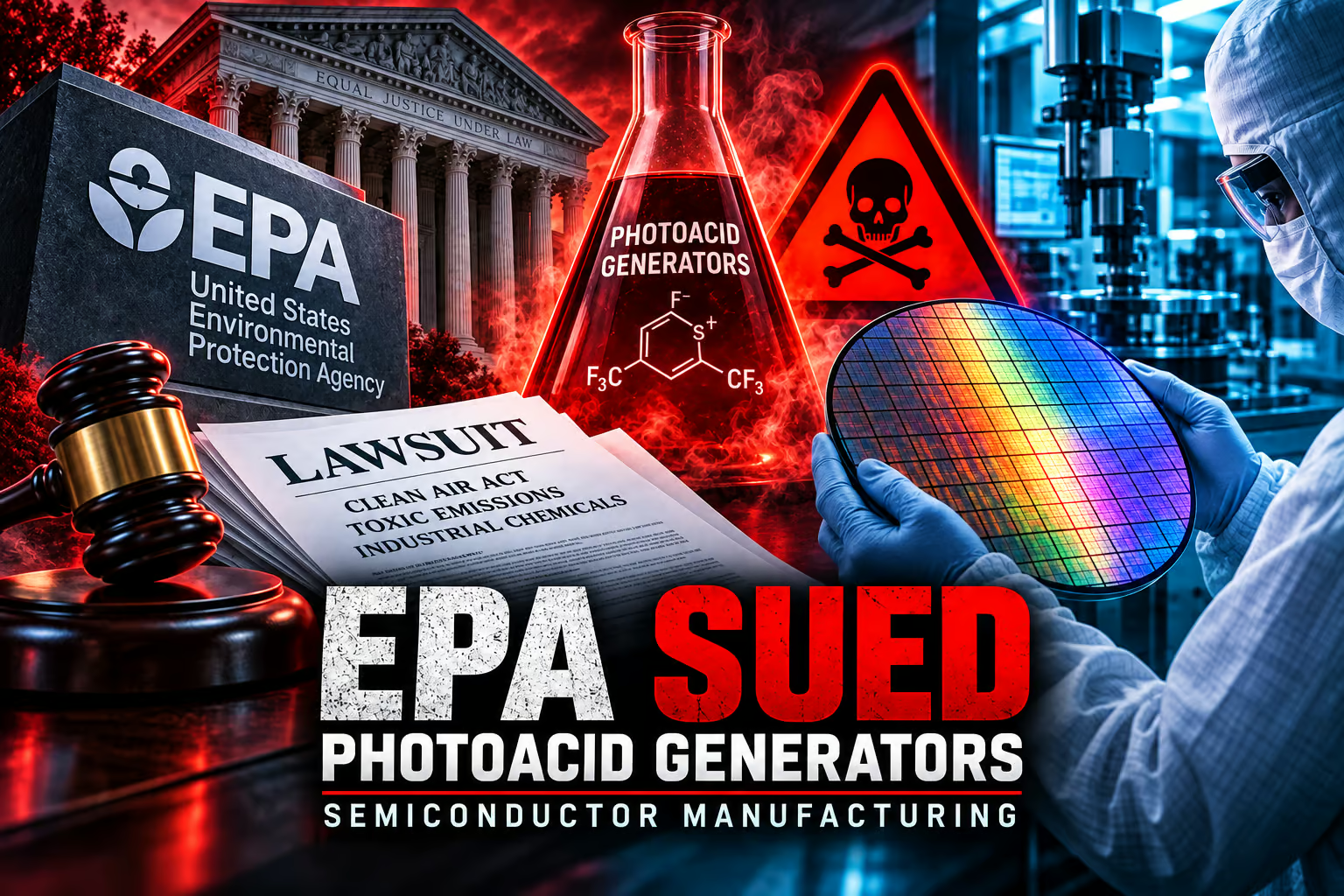
The Environmental Protection Agency approved two photoacid generators used in semiconductor manufacturing for import and use in the United States, and the nonprofit Earthjustice is now suing the agency over those decisions. The chemicals, used to make chips, are linked to acute lethality, cancer, eye corrosion, neurological damage, and reproductive harm, and they also appear to be PFAS, the so-called forever chemicals that persist in the environment. Earthjustice argues the EPA cleared the chemicals with minimal and non-protective restrictions, failing its core duty under the Toxic Substances Control Act.
What did the EPA approve, and why is it controversial?
Photoacid generators are a class of compounds central to photolithography, the process that patterns the microscopic circuits on silicon wafers. Without them, modern chip production would not be possible. The trade-off is toxicity: exposure at certain levels can cause sudden death, and chronic exposure is tied to cancer, eye corrosion, neurological damage, and reproductive harm. Researchers have also flagged that some of these compounds are PFAS, which resist breaking down once released and can accumulate in water, soil, and living organisms.
What is Earthjustice alleging in the lawsuit?
Earthjustice, represented by attorney Jonathan Kalmuss-Katz, argues that the EPA does not know the concentrations at which the two approved chemicals become acutely lethal or cause serious health damage, yet the agency allowed their import and use anyway. Under the Toxic Substances Control Act, if a chemical may present an unreasonable risk, the EPA is required to prohibit or limit its manufacture, processing, distribution, use, or disposal to the extent necessary to protect the public. Kalmuss-Katz described the approvals as turning the new chemical review process on its head, saying the agency failed at its most fundamental obligation to protect the public from unreasonable risk. The complaint also frames the approvals as part of a broader pattern tied to data center expansion.
How does this connect to data centers and domestic chip production?
The current U.S. administration has pushed to bring semiconductor manufacturing back onshore, and President Donald Trump issued an executive order last year to fast-track approvals of chemicals needed for data centers. It is unclear whether the two newly approved photoacid generators fall under that order. Even so, AI-driven demand for data center compute has lifted orders for advanced chips, which keeps fabs running and pulls more of these process chemicals through the supply chain. Domestic chip production does require hazardous chemistry, but environmental groups argue the EPA still must guarantee that those substances do not reach waterways and that workers are shielded from exposure.
Why are forever chemicals a special concern in chipmaking?
PFAS earn the forever chemical label because their carbon-fluorine bonds are unusually strong and resist natural degradation, so once they leave a fab they tend to linger in effluent and air emissions. The semiconductor industry has historically relied on PFAS-laden chemistries, and researchers are working on ways to clean up or replace them in chip processes. That is why approving new compounds without rules forcing their removal from wastewater and stack gases raises alarm: a single new source can add to an already difficult cleanup load for downstream communities.
What other lawsuits have flagged the same risk?
A separate lawsuit targets wastewater and air permits issued for Micron’s planned New York fab, arguing that those permits still allow forever chemicals to reach the Oneida River. Together, the two cases point to a recurring tension: regulators are trying to accelerate domestic fab construction at the same time communities near fab sites are demanding tighter discharge and emission limits.
What happens next with the EPA lawsuit?
The suit asks a court to compel the EPA to follow the statutory requirements of the Toxic Substances Control Act and either prohibit or restrict the two photoacid generators until the agency can show that unreasonable risk has been addressed. Litigation of this kind typically triggers additional EPA review of the underlying risk assessments and may revisit the conditions placed on import and use. The outcome will shape how quickly new fab chemistries can reach U.S. fabs and what protective conditions come attached to them.
FAQ
What are photoacid generators, and why are they used in semiconductor manufacturing?
Photoacid generators are light-sensitive compounds used in photolithography to pattern the tiny circuits on silicon wafers. They are essential to modern chip production, but they are also highly toxic, and exposure can cause sudden death at certain levels along with cancer, eye corrosion, neurological damage, and reproductive harm.
Are the approved chemicals considered PFAS forever chemicals?
Yes. The chemicals appear to be per- and polyfluoroalkyl substances, a class of synthetic compounds whose strong carbon-fluorine bonds keep them from breaking down easily in the environment. That persistence is why they are often called forever chemicals and why cleanup in fab effluent is a long-running concern.
What is Earthjustice asking the EPA to do?
Earthjustice argues the EPA skipped required protections under the Toxic Substances Control Act, which obligates the agency to prohibit or limit a chemical’s manufacture, processing, distribution, use, or disposal if it may present an unreasonable risk. The suit seeks restrictions on the two photoacid generators until the agency demonstrates that unreasonable risk has been addressed.
This article summarizes reporting from tomshardware.com.