
Microsoft Bing is testing search result snippets without favicons, producing a stripped-down look across the results page that removes the small site icons normally placed in front of each listing.
The change removes the small site icons that normally sit next to each result link, leaving the page with plain text and URLs where the graphical markers used to be. Without the icons, the results page takes on a noticeably more text-heavy appearance.
What changed in the test
Each search result on the standard Bing results page normally displays a favicon, the tiny logo that identifies a website, next to the page title and URL. The test version drops that favicon entirely, including the icon next to sponsored ad listings. What remains is the same blue link text, the green display URL, and the snippet description underneath, just without the visual anchor on the left.
Where the screenshots came from
The favicon-less design was first shared through screenshots posted on X. One screenshot focused on the sponsored ads row specifically and questioned whether the missing icon for paid listings was intentional or a glitch. A second screenshot offered a direct before-and-after comparison, showing the same query rendered one way with favicons and another way without, making the visual difference immediately obvious.
Why the page looks different
Favicons add a small spot of colour and brand recognition to an otherwise uniform list of blue links. Removing them makes the page read more like a plain document. For users, the information stays the same; the result title, URL, and description are all still present. What changes is the visual hierarchy. The eye no longer has a quick icon to lock onto as a way to distinguish one source from another at a glance.
For site owners and search marketers, the test is a reminder that Bing controls the look of its results page and can experiment with how much chrome each listing carries. The favicon itself is still part of a site’s identity; it just may or may not be drawn next to the listing.
What it means for advertisers
The test also affected sponsored ad listings, which is the detail that drew attention first. Ads on Bing normally carry the same favicon treatment as organic listings, so pulling the icon from paid results made those ads blend in further with the surrounding text. Whether that helps or hurts click-through on ads in the test will depend on what Bing measures, and the company has not commented on the test publicly.
How to keep an eye on Bing tests like this
Bing A/B tests like the favicon removal tend to surface through screenshots shared in the search community before Bing itself announces them. Watching for those community screenshots is the fastest way to see a test in progress, since the test itself can only be observed from inside a live session.
For anyone running technical SEO work or paid Bing Ads campaigns, a small visual change in the SERP is worth noting even if rankings and click data are unchanged. The way a listing appears shapes how it is read. Rank position across a service area is what a geo grid report shows, and SEOScanPro’s GEO Grids do this for local visibility tracking, which is a separate but related way to watch how a listing performs in different locations.
FAQ
Is Bing actually removing favicons from search results?
Bing is testing the removal of favicons from search result snippets. It is an A/B test, not a confirmed permanent change, and Bing has not stated when or if it will roll out broadly.
Does the favicon test affect Bing ads too?
Yes. The screenshots shared from the test show that favicons were missing from Bing sponsored ads as well as from organic listings.
Why would Bing remove favicons from results?
The test produces a more text-heavy, less graphical results page. The exact motivation has not been stated by Bing.
Try the geo grid tool
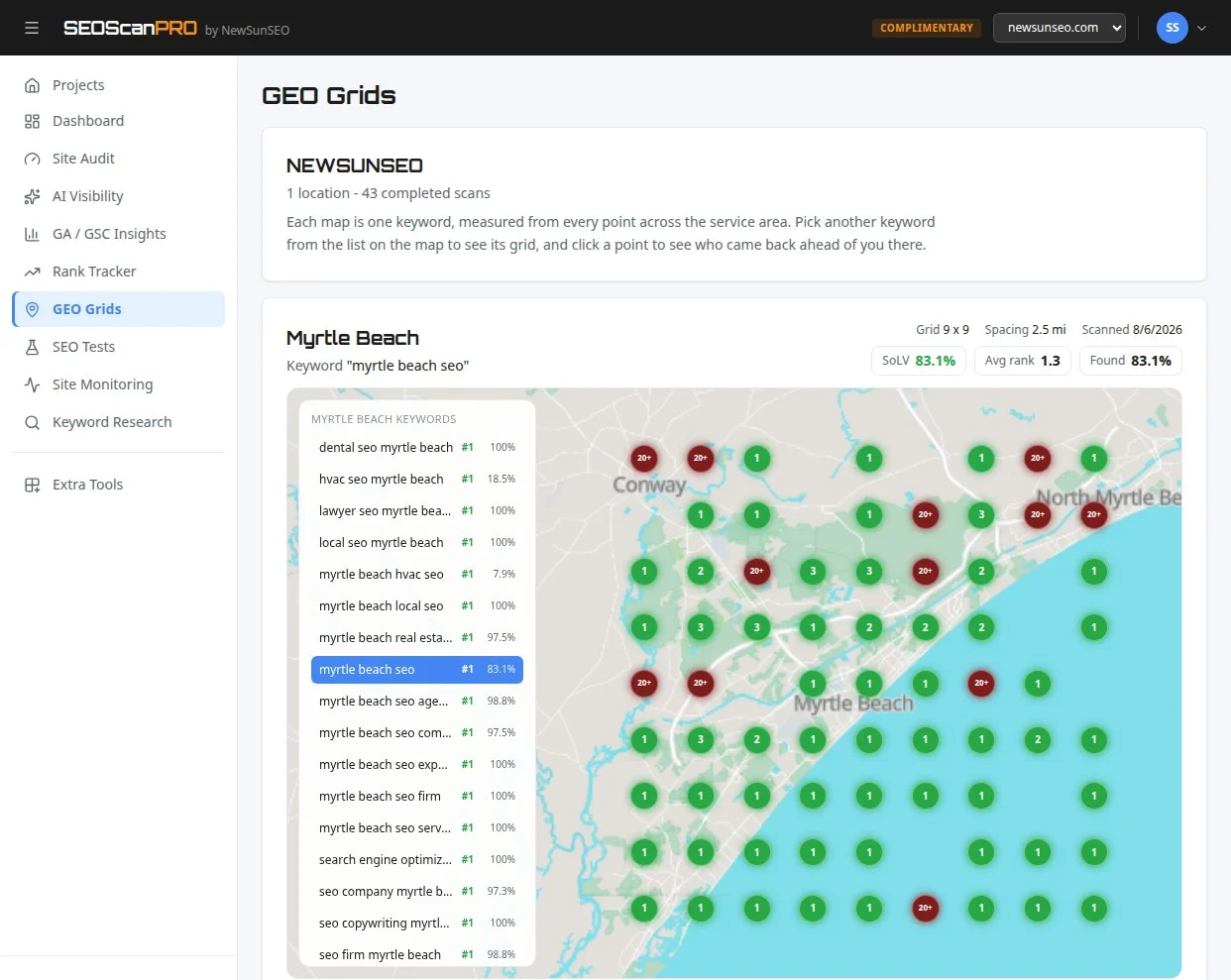
SEOScanPro runs a full technical audit of a site and shows the measured result behind every check. Open the geo grid tool.