
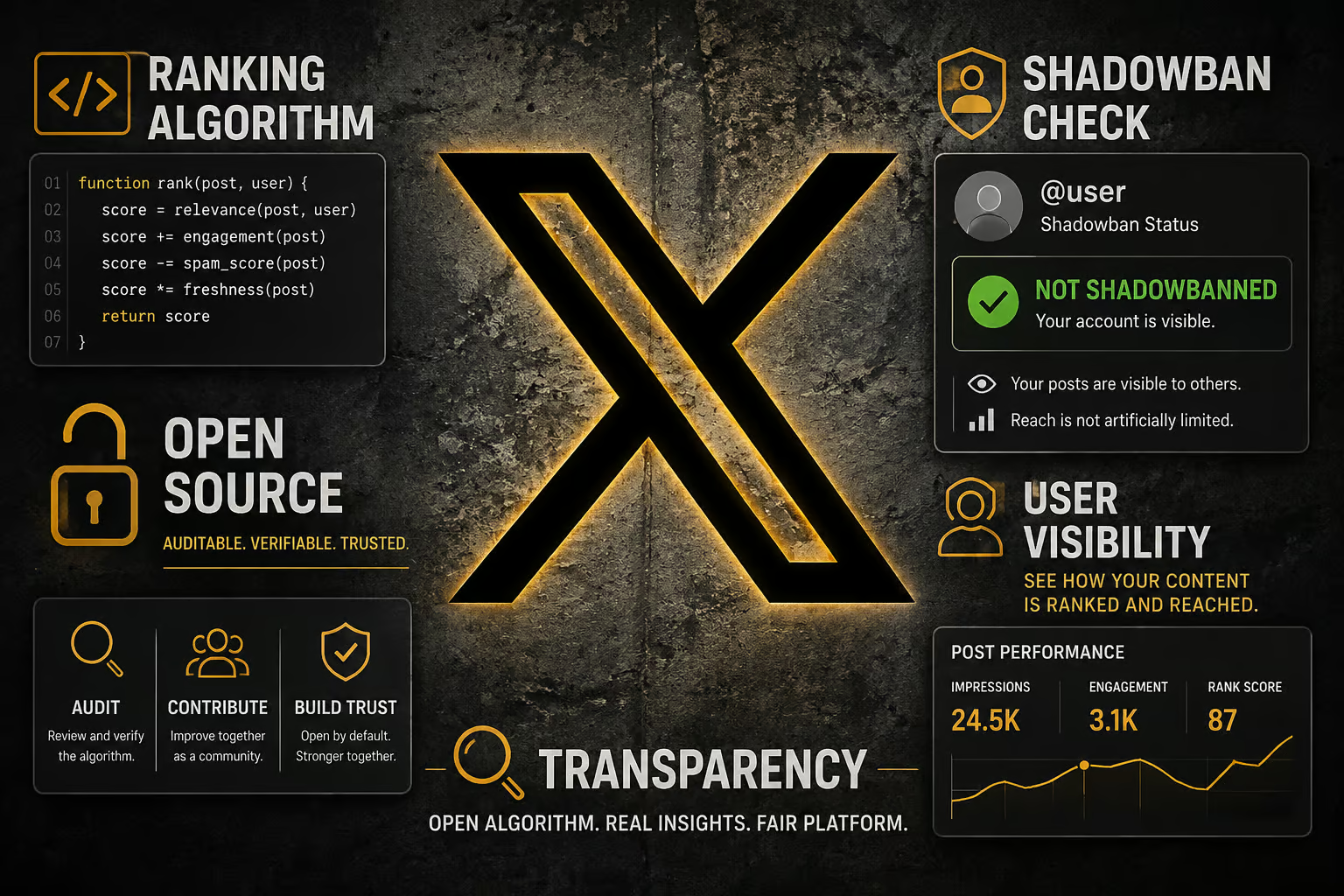
X is publishing the source code for its For You timeline, including the core ranking engine that decides which posts appear in a user’s feed, and is adding a settings tool that lets people export data showing whether their accounts or posts have been affected by the platform’s ranking systems. The social network announced the changes on Thursday, August 13, 2026, positioning the release as a major expansion of its transparency efforts.
What is being released
The code is being posted on GitHub under the Apache 2.0 license, covering the pipeline that pulls posts, scores them, and assembles the For You feed. According to the company, the release also includes model configuration, filter logic, and the parameters used to weight different signals, which together determine which posts are actually shown. The resulting codebase is roughly 10 to 15 times larger than X’s previous open source releases.
Internal components described in the announcement include the Phoenix scoring system, which can be trained and run using the published code. The repository is structured to allow developers to submit pull requests, with X engineers reviewing proposed changes for possible inclusion in the live algorithm.
How the user-facing shadowban check works
Alongside the code, X is rolling out a new “Under the Hood” section in the app’s settings. Users who have posted at least 10 times in the past calendar month can download an aggregate JSON file containing their ranking data for that month. The file shows whether any labels have been applied to their account or to specific posts by X’s ranking systems.
For non-technical users, the company points to a workaround: drop the JSON file into an LLM of their choice, point the model at the GitHub repository, and ask for an interpretation of what the file means. The feature launches first as a pilot to a test group of accounts that are at least a year old, with broader rollout planned later.
What is being held back
Not every system is included. Components that use Grok to predict whether a post could violate a rule are excluded from the release, a decision the company framed as a guard against bad actors reverse-engineering the rules to flood the network with spam. The published code also covers the Phoenix scoring system but does not expose the per-post score used in production.
Background on transparency concerns
The release is explicitly aimed at long-running questions about how X’s algorithm shapes political discourse, elections, and the spread of misinformation. Before the platform was acquired by Elon Musk, members of Congress from the Republican party alleged that the then California-headquartered social network had shadowbanned conservative voices, claims the company consistently denied. The new tools are designed to let outside researchers and users verify directly whether content has been suppressed or downranked.
The move follows a broader pattern in which the platform has opened up parts of its codebase in stages, while also expanding features like Community Notes. At the same time, the company has scaled back other forms of disclosure since going private and becoming no longer required to report to the SEC, including less frequent reporting of user metrics, growth, revenue, and government takedown requests. After merging with SpaceX, monthly active user numbers have been published again.
FAQ
What did X release on GitHub?
X published the source code for its For You timeline on GitHub under the Apache 2.0 license, including the core ranking engine, filter logic, model configuration, and signal weighting. The codebase is roughly 10 to 15 times larger than its previous open source releases.
How can users check if they have been shadowbanned?
Users who have posted 10 or more times in the past month can open the new “Under the Hood” section in the app’s settings and download a JSON file showing whether any labels have been applied to their account or posts over the past calendar month. Non-technical users can feed the file into an LLM alongside the GitHub repo for an interpretation.
Which parts of the ranking system are not included in the release?
The release excludes components that use Grok to predict whether a post could violate platform rules, because X wants to prevent bad actors from gaming the system. The per-post score used in production is also not exposed, even though the Phoenix scoring system itself can be trained and run from the open source code.
This article summarizes reporting from techcrunch.com.