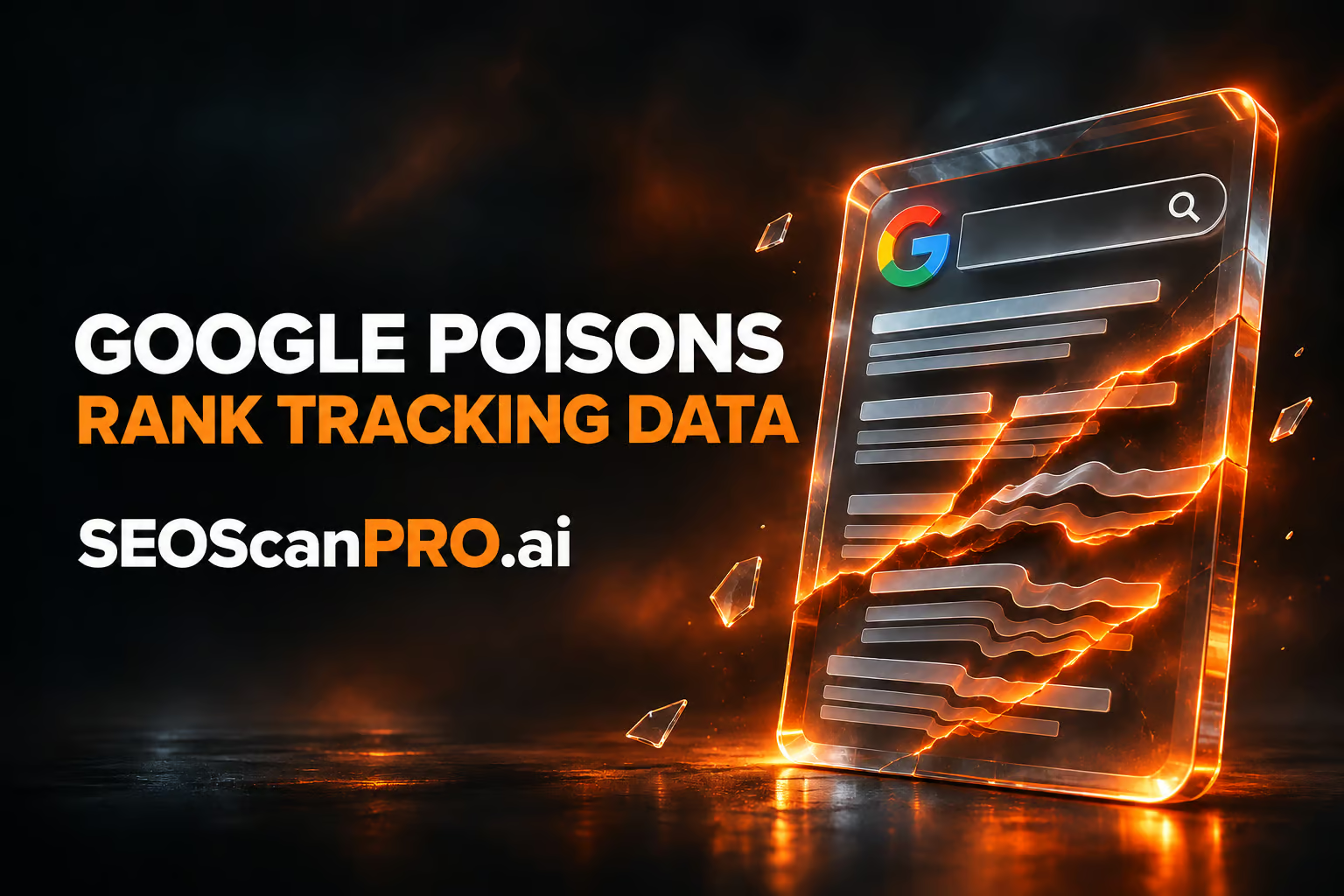
Website owners can protect their visibility decisions by treating third-party Google rank data as a signal rather than a source of truth and by cross-checking changes with Google Search Console and manual checks. Since late summer 2026, Google has been returning blocked, incomplete and sometimes inaccurate results to ranking trackers, making reported positions and traffic estimates less dependable.
The disruption affects several parts of the tracking process. Google is blocking wide residential proxy networks, using more CAPTCHA challenges and, according to research cited by Search Engine Roundtable, serving normal-looking search result pages with incorrect data to suspected scrapers. The result can be false ranking drops, missing positions and inconsistent recovery signals.
How Google is interfering with third-party rank tracking
Google began testing goto redirects in July 2026 as part of its effort to identify and block scrapers, according to the source article. Redirects can be handled by tracking tools, but the broader changes have created more serious data-quality problems.
Research by Nozzle found that 8.0% of the sampled Google result pages came back poisoned. The affected pages appeared normal, so the problem was not visible from the page layout alone. According to the research, the tracked site could disappear from the top 10 even though the page offered no obvious warning. Some pages were blocked first and then served poisoned data. In other cases, social sites and forums filled the space left by the tracked domain.
Google also reduced the maximum num parameter from 100 in 2025, required JavaScript and made scraping more expensive. Some rank trackers now sample search results rather than count every position, which can introduce daily measurement noise into reported rankings.
What has changed across rank tracking providers
The impact has varied by provider. Ahrefs reported that between 5% and 20% of search results were affected depending on the data provider. The company said it had added filters to detect abnormal results, request replacements and clean affected historical data.
Semrush said it had seen poisoned Google results since late summer. Its statement said additional checks were used to filter and verify results, with no interruption to the service. The company said individual inconsistencies could remain, most often beyond the first page, and asked users to report them for support.
SE Ranking said its fixes restored normal rank checks for the vast majority of keywords and that data for affected dates had been corrected. The company reported that the problem still affected roughly 2% of tracked results on October 16, 2026, although that share was continuing to shrink. It also gave users a status page and troubleshooting steps for rankings that appeared wrong.
Sistrix, Data for SEO, Advanced Web Rankings and Morningscore also published notices or status updates concerning Google ranking data. Some notices addressed the earlier goto redirects, while others covered incomplete results and broader tracking problems.
How this appears in a website audit
A rank-tracking failure can resemble a site-wide visibility loss in an audit. A domain may suddenly appear to fall beyond the top 10, keywords may appear to have no ranking position and previously visible pages may be replaced by social or forum results. A recovery may also disappear from a tracker even after Search Console data and manual checks show that the site returned to its previous position.
The audit needs to separate a possible ranking change from a collection failure. Evidence of the latter includes many unrelated keywords changing at once, a sharp discrepancy with Search Console, inconsistent results across providers and a normal-looking live search result that differs from the tracked position.
SEOScanPro’s rank tracker can check a site’s visibility as often as every five minutes, while its comprehensive website audits include on-page analysis. Those checks can provide measured evidence for comparing a reported decline with current site conditions, although the source notes that search visibility tools still need verification against other signals.
What to do now
- Check the live search result manually. Use an incognito window and inspect the relevant query. This can show whether the ranking exists when the tracker says it is missing.
- Compare the change with Google Search Console. Search Console remains Google’s own portal for ranking and search-performance information. It does not provide click or query data for generative AI search features such as AI Overviews and AI Mode, but it remains an important reference for organic results.
- Check more than one provider. Reports from Ahrefs, Semrush, Sistrix, SE Ranking and other tools have differed during the disruption. Agreement across providers carries more weight than a single isolated movement.
- Review the timing of the affected period. Providers have identified incomplete or unreliable Google data from late summer through September and October 2026. Historical figures from that period may contain false drops, missing positions or incomplete results.
- Document anomalies before changing strategy. Record the affected keywords, dates, provider and live search result. A clear comparison helps distinguish measurement noise from a genuine ranking decline and avoids changing a site based on faulty data.
What this means for you
Current rank-tracking data can still provide direction, but it requires corroboration. The most useful audit is one that combines a live search check, Search Console performance, provider comparisons and on-page analysis rather than treating an automated ranking drop as proof that the website lost visibility.
The source also notes that Google may not be targeting search marketers’ rank trackers directly. The measures may primarily affect AI bots and data services that scrape Google results at scale. Either way, the practical result for website owners is the same: verify suspected ranking changes before making content, technical or competitive decisions based on them.
FAQ
Are Google rank trackers working correctly in October 2026?
Several providers continued to face incomplete or inaccurate Google ranking data in October 2026. SE Ranking said normal checks had resumed for the vast majority of keywords, but roughly 2% of tracked results remained affected on October 16. Other providers continued to add filters and correct affected data.
What are poisoned Google SERPs?
Poisoned Google SERPs are normal-looking search result pages that contain inaccurate results for suspected scrapers. According to Nozzle’s research, 8.0% of sampled pages came back poisoned, which could cause tracked sites to fall out of the top 10 or appear to lose rankings.
What should I use to verify a reported ranking drop?
Check the live Google result, compare it with Google Search Console and consult more than one rank-tracking provider. The source also recommends documenting the query, date, provider and observed result before making site changes.
Try the AI visibility report
SEOScanPro runs a full technical audit of a site and shows the measured result behind every check. Open the AI visibility report.