

Catching organic traffic decline early gives site owners a real chance to fix what is breaking before rankings, revenue, and visibility take the hit. A set of leading indicators surfaces weeks before the traffic charts turn red, and each one points to a specific part of the SEO stack that needs attention.
Traffic loss rarely arrives without warning. The signals show up first in crawl data, index coverage, and the search appearance reports inside tools like Google Search Console. Reading those reports on a schedule, rather than after the damage is done, is the difference between a quick fix and a long recovery.
What changes in Search Console before traffic drops?
Google Search Console is the earliest place a fall in organic traffic tends to show up. The metrics to watch are the ones Google tracks directly: clicks, impressions, average position, and coverage in the indexing reports.
A healthy site usually shows steady impressions with a stable average position. When average position starts drifting downward even though impressions hold steady, fewer clicks follow, and the click-through rate on the search results page falls with it. That combination, falling position and falling CTR while impressions look flat, is a textbook early warning.
The Index Coverage report tells a parallel story. A sudden rise in “Excluded” pages, especially under “Crawled, currently not indexed” or “Discovered, currently not indexed,” means Google is finding URLs but choosing not to put them in the index. The longer those pages stay excluded, the more impressions and clicks quietly leak away.
How does the backlink profile signal trouble ahead?
Backlinks remain one of the strongest outside signals Google uses to judge a page. Tools like Ahrefs and Semrush track referring domains, and a slow loss of referring domains over weeks is one of the clearest precursors to a ranking drop.
The pattern to watch is not a single lost link but a steady, multi-week trend of referring domains declining while no new ones replace them. That kind of quiet erosion weakens the authority of the pages that depend on those links, and rankings tend to slip before traffic follows.
Anchor text distribution is the second thing to scan. A sudden shift toward branded or generic anchors, or away from the keyword-rich anchors that pointed at money pages, can read as a link profile losing its topical focus. Search engines respond to that drift over time.
What do rankings reveal before clicks fall?
Rank tracking catches movement faster than traffic data because rankings shift days or weeks before the click volume reflects them. A rank tracker set to a daily cadence across the keywords that actually drive business will surface movement long before a monthly analytics report does.
Position drift on a cluster of related queries is more telling than a single keyword moving. When five or ten closely related searches all drop two or three positions in the same week, the page or template behind them is usually the problem, not the individual queries. SERP feature changes, such as a new featured snippet or an AI overview pushing the organic results down, can produce the same pattern.
A rank tracker that checks positions every five minutes, rather than weekly, makes those clusters visible the day they happen instead of after the monthly report.
Why does technical SEO health predict traffic loss?
Technical issues tend to accumulate quietly. A site can lose crawl budget to faceted navigation, waste link equity on orphan pages, or block resources that affect how Google renders the page, all without any obvious alert.
Core Web Vitals are the most public part of the technical picture. Google has confirmed that page experience signals play a role in ranking, and a steady slide in Largest Contentful Paint, Interaction to Next Paint, or Cumulative Layout Shift over several measurement cycles is a strong leading indicator. Slow-rendering content is harder for Google to crawl efficiently and harder for users to wait for.
A full technical audit surfaces the issues that hide behind the visible metrics: broken internal links, redirect chains, orphaned pages, slow server response times, and JavaScript rendering problems. Fixing those before the rankings move is far cheaper than recovering after they do.
How can content quality issues be caught early?
Content decay is one of the slowest-moving warning signs, which makes it one of the easiest to miss. A page that ranked well for years can lose ground to fresher, more detailed competitors without any single dramatic event.
The signals to watch are competitor content updates on the same query, a steady decline in impressions for a page even while its average position holds, and shrinking word count or depth on the page itself compared with what now ranks on page one. Traffic to a single page can erode for months before the site-wide numbers register.
Quarterly content audits, comparing each priority page against what currently ranks for its target query, catch this kind of decay before it becomes a site-wide problem.
What does a leading indicator dashboard look like?
Bringing the signals together matters more than watching any one of them. A useful early-warning setup tracks four streams on a weekly cadence:
- Search Console metrics: clicks, impressions, average position, and CTR, broken out by page and query.
- Index Coverage status counts, especially the “Excluded” buckets and any new “Error” categories.
- Referring domain count and anchor text distribution from a backlink tool.
- Rank positions on the core keyword set, checked at least daily, ideally more often.
When two or more of those streams move in the same direction at the same time, the chance of an organic traffic drop in the next reporting period is high enough to investigate. A rank tracker that maps position across a whole service area makes the same kind of geographic picture available for local businesses, so the towns losing visibility show up before the city-wide average does. SEOScanPro‘s GEO Grids show that view for sites that need it.
How quickly should these signals be acted on?
The window between the first signal and the traffic drop is usually measured in weeks, not days. Acting on the first confirmed pattern, rather than waiting for a second confirming data point, is what turns an early warning into a saved quarter.
The triage order matters. Crawl and index coverage issues get investigated first because they affect the largest number of URLs. Backlink profile changes come next, then Core Web Vitals and rendering problems, then content refreshes for the pages showing position drift on tracked keywords.
A standing weekly review of the four streams above, with the rule that two simultaneous moves trigger a deeper audit, catches most organic traffic declines before they show up in the analytics view.
FAQ
What is the earliest warning sign that organic traffic will fall?
Average position in Google Search Console drifting downward while impressions stay flat. Falling position with flat impressions pulls CTR down, and that combination usually shows up weeks before click volume drops in analytics.
How often should rankings be checked for early warnings?
Daily at minimum, and more often for sites where small position changes have a big business impact. Rank trackers that refresh every five minutes make cluster movement visible the day it starts.
Does a backlink profile change really predict a traffic drop?
Yes, when referring domains decline steadily over several weeks without replacements, and when anchor text distribution shifts away from the keywords that the key pages target. Both patterns weaken the authority those pages rely on, and rankings tend to slip before the click numbers do.
Try the site audit tool
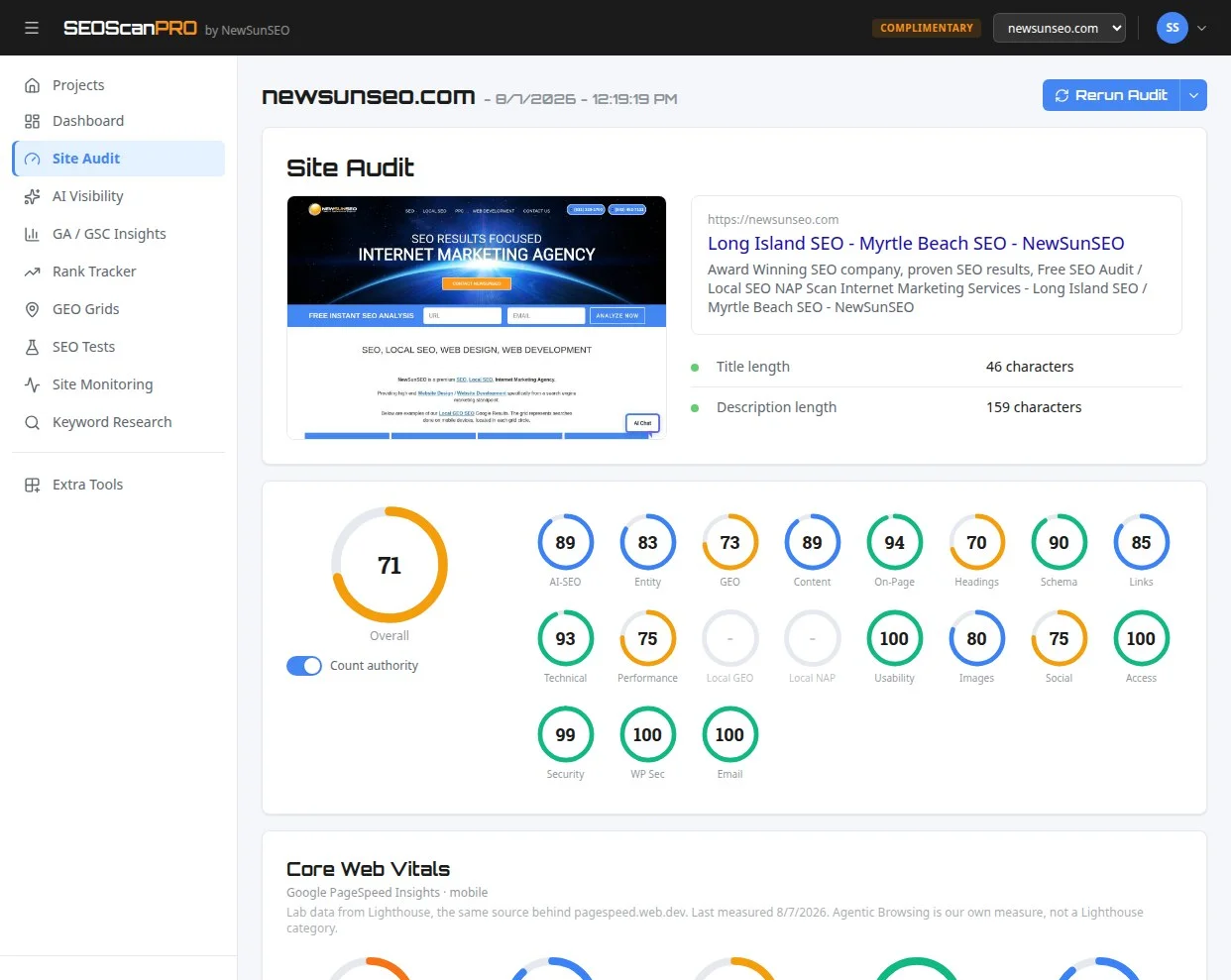
The site audit tool runs a full technical audit of a site and shows the measured result behind every check. Open the site audit tool.