
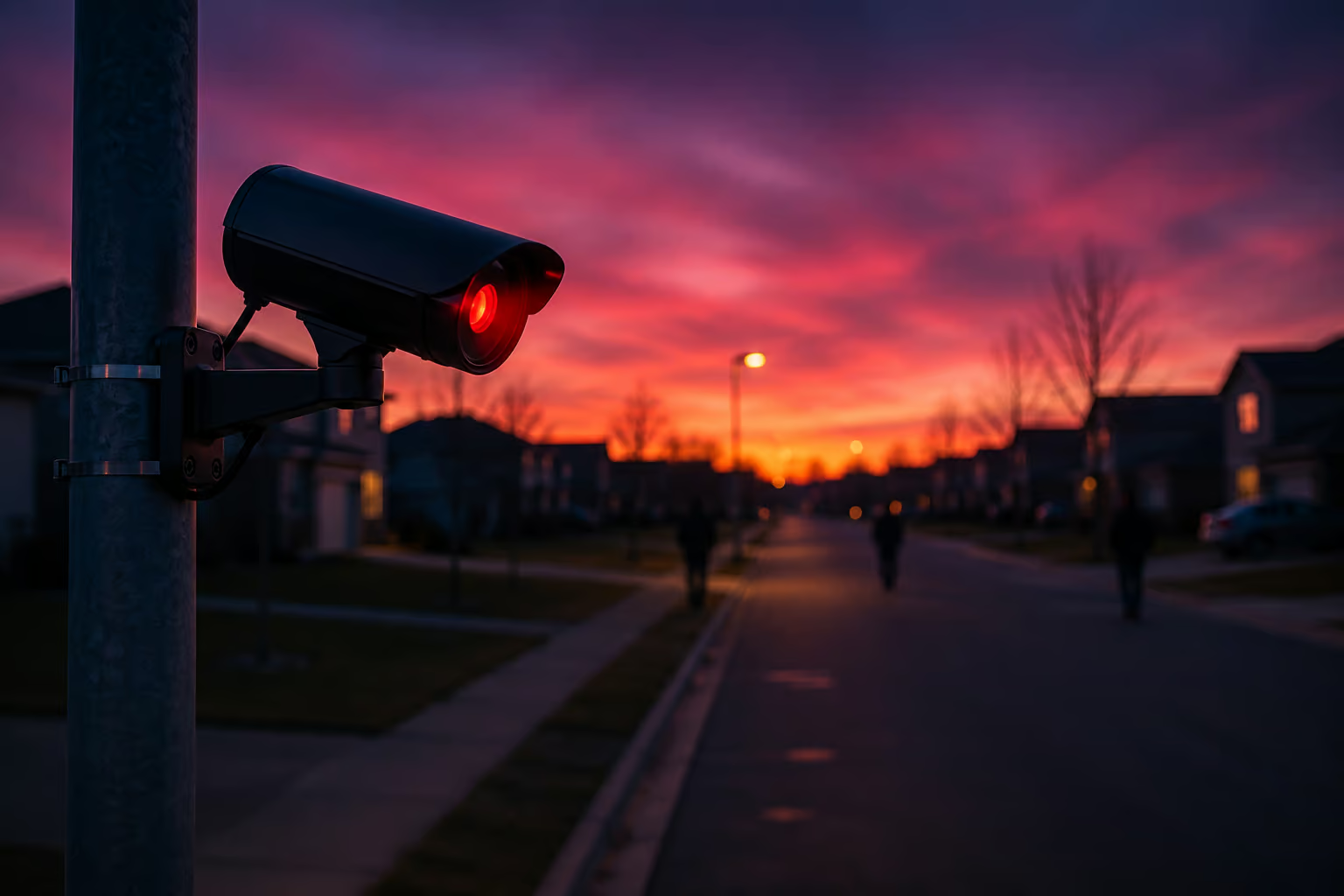
Flock Safety has pulled the plug on its Distress Detection audio pilot, an always-on microphone feature that scanned public spaces for sounds of human distress, including screaming, after a sustained pressure campaign from privacy advocates. The Electronic Frontier Foundation confirmed the decision on July 17, 2026, noting that the cancellation falls short of a full retreat because Flock still operates thousands of acoustic sensors nationwide.
What the cancelled pilot actually did
The Distress Detection feature was announced in October 2025 as an expansion of Flock’s acoustic gunshot detection hardware, originally branded as Flock Raven. Flock repackaged the same microphones to flag sounds of “human distress,” with early marketing materials explicitly using the word “screaming.” After public scrutiny, the company softened the wording to the generic term “distress” without changing the underlying capture capability.
Civil liberties groups flagged the feature as a textbook case of mission creep. A microphone network sold on the promise of catching gunshots was being repurposed to listen for any heightened vocalization, which critics argued would trigger armed police responses to arguments, crying, or children playing.
Why the timing matters for site owners and auditors
Public-facing infrastructure sits at the intersection of physical and digital exposure. When a vendor’s reputation shifts, every blog post, case study, and product page that references that vendor inherits some of the risk. Sites that publish Flock Safety tutorials, integration guides, or neighborhood camera maps should now revisit the framing on three fronts.
First, accuracy claims about audio detection have taken a hit. Documented incidents in Chicago saw police shoot at children setting off fireworks because acoustic gunshot detection misfired. Any page that quotes Flock’s marketing copy about precision or response times should be reworded to reflect the contested record.
Second, municipal contracts are fragile. Flock cameras are installed through city procurement, neighborhood associations, and private groups that share footage with law enforcement, which is why Houston Police struggled to identify ownership of cut devices on July 4, 2026. A page that promises “Flock coverage in your area” may describe a network that is being actively vandalized or decommissioned. Refresh the data or remove the promise.
Third, the cancellation wording matters for SEO. Flock’s own statement says audio detection “was designed to help identify potential violent incidents in areas where other public safety tools were less effective” and that the feature “was only available to a small number of customers as part of a limited trial, and was never broadly released.” The EFF counters that “this was a misguided and dangerous feature because of the civil liberties concerns it poses, the possibility it could summon armed police to every loud interaction happening on the street.” Pages that quote either side should link both and date the quote so future readers can see the editorial position.
How the opposition organized
Resistance to Flock’s surveillance footprint has escalated through direct action. Reports of individuals hacking down, blinding, or otherwise disabling Flock cameras have reached a scale the EFF describes as “countless.” In several online communities, people who destroy the devices are treated as folk heroes, and defense funds are being organized for those facing legal consequences.
On July 4, 2026, multiple Flock cameras along Houston’s Washington Avenue were found cut in half and spray-painted, including one with an American flag painted over its lens. Houston Police opened an investigation but could not immediately determine ownership, a transparency gap that mirrors the difficulty journalists and auditors have when mapping which entity actually controls a given pole-mounted device.
Flock condemned the vandalism, calling it illegal and community-harming, and claimed that overall vandalism reports remain low. Independent trackers push back on that figure, given the steady stream of incidents posted to local news and social channels.
What an audit should check on a site covering Flock
- Outdated marketing claims. Any stat about Flock’s camera count, coverage area, or detection accuracy should be sourced and dated, since the company has revised public-facing language several times in the past year.
- Third-party embeds. Map widgets and live dashboards that pull Flock-adjacent data may break or display stale records as contracts change hands between cities, HOAs, and private operators.
- Privacy policy alignment. If a page describes what audio data is captured, that description needs to match the current product, not the Distress Detection pilot that no longer exists, and not the broader acoustic gunshot detection that does.
- Schema markup. News articles and product pages referencing Flock should use current Organization and Product schema, with the cancellation date noted in the article body so structured data does not contradict the visible text.
The pattern beyond Flock
The EFF’s framing of the cancellation fits a longer arc of American pushback against surveillance expansion, from 1970s congressional reviews of FBI programs to the 2013 revelations of NSA mass data collection. The foundation’s conclusion is that public pressure can move both companies and the lawmakers who control a city’s procurement budget, though the underlying infrastructure tends to outlast any single product decision.
Flock continues to operate acoustic sensors that listen for gunshots, fireworks, and what the company labels “community disruption.” The Distress Detection cancellation closed one front, but the remaining microphone network, along with the company’s far larger automated license plate reader footprint, is still in place. The next pressure point is likely to be the gunshot detection hardware itself, where contested accuracy and documented police misfires give critics fresh material.
FAQ
What was Flock Safety’s Distress Detection pilot?
An always-on audio feature announced in October 2025 that used high-powered microphones in Flock’s network to flag sounds of “human distress,” originally described as “screaming” before the wording was softened.
When did Flock Safety cancel the audio surveillance pilot?
The cancellation was confirmed by the Electronic Frontier Foundation on July 17, 2026, with Flock citing “careful consideration and community consultation.”
Does Flock Safety still operate audio surveillance devices?
Yes. Only the Distress Detection feature was cancelled. The company continues to operate thousands of acoustic sensors across U.S. communities, including gunshot detection hardware originally branded as Flock Raven.