
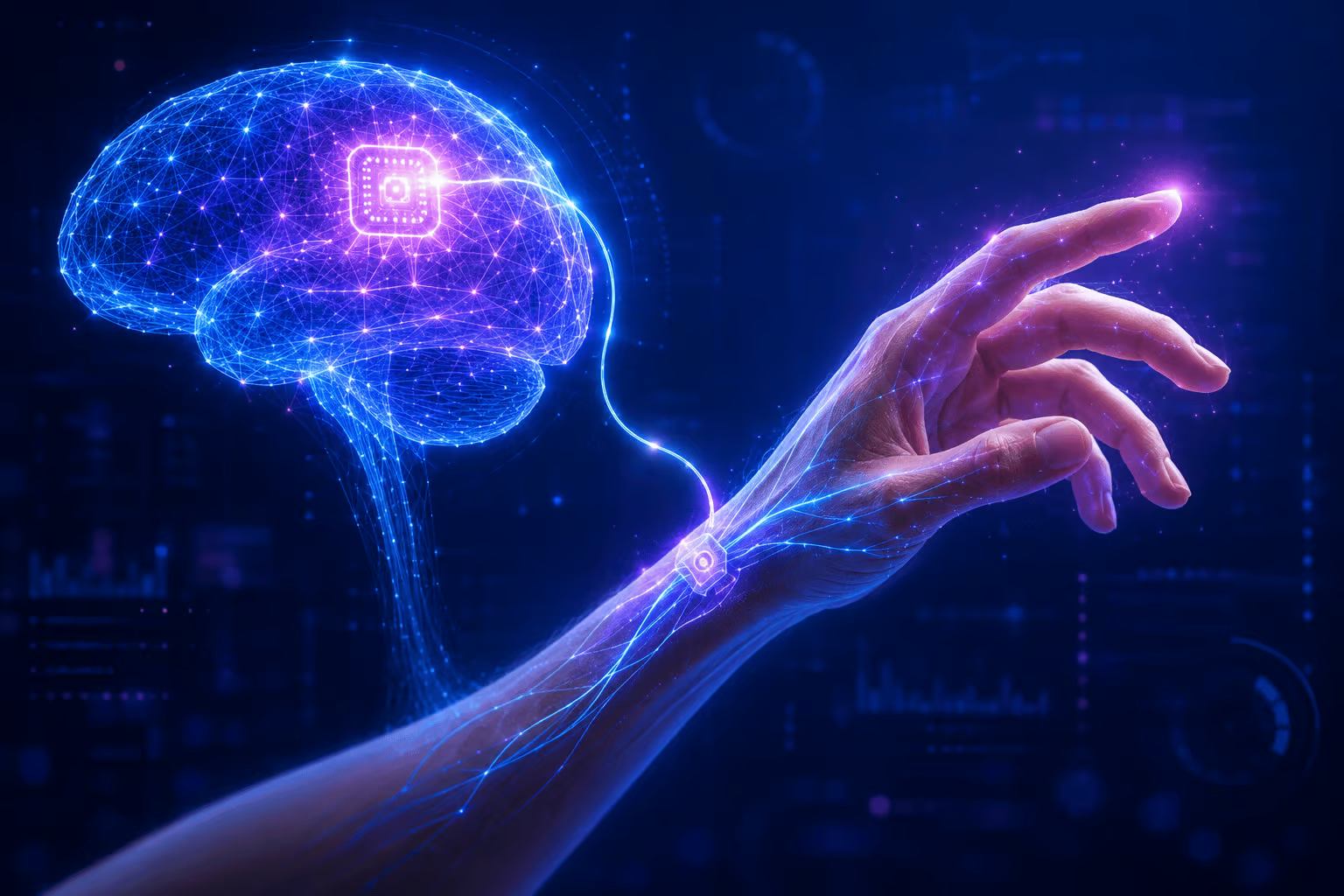
A team at the Feinstein Institutes for Medical Research has used a brain-computer interface, AI decoding, and electrical stimulation of the spinal cord and brain to restore both movement and the sense of touch in a man paralysed from the chest down, according to a study published in Nature Medicine. The researchers say some of the gains were still present more than two years after stimulation was stopped, and they frame the result as evidence that the nervous system itself partly rewired.
For an SEO-focused reader, the interesting angle is not the headline miracle. It is what a paper like this reveals about how researchers measure, attribute, and report recovery, and which signals a site owner can trust when scanning health and science coverage for links, claims, or product mentions. That lens drives the rest of this post.
What the trial actually measured
The participant, Keith Thomas, broke his neck in a 2020 diving accident and was left with complete tetraplegia, unable to lift his hands to his face. He enrolled in the three-year study 13 months after the injury. The team did not just look at whether he could move. They tracked arm strength, sensation, and dexterity over specific windows, which is what makes the numbers comparable rather than anecdotal.
Over 35 weeks of training, Thomas’s right arm grew 86% stronger and his left arm 62% stronger. After about 25 weeks of a second technique called cortical mirroring, he regained feeling in a wrist that had been numb since the injury. In a dexterity test designed to be hard, he could lift empty eggshells without breaking them 87% of the time, even while holding a conversation.
From an auditing standpoint, those are the kinds of figures worth pulling into a content brief: a defined window (35 weeks), a defined body part, a defined test (eggshell lift), and a defined outcome (no break). When you see coverage that drops the window or the test, you are reading a softer claim than the paper made.
Why the lasting effect matters more than the in-clinic result
The strongest signal in the paper is not what Thomas could do with stimulation on. It is what he could still do after stimulation was turned off. On a recent follow-up, the team reported that many of the gains were still present more than two years later.
Chad Bouton, the study’s corresponding author, drew that line explicitly in a statement: “We’re not just bypassing the injury; we’re actually rewiring the nervous system.” In conversation with the Guardian he called the moment “incredible.” Thomas put it in human terms, saying the return of feeling in his hand let him hold his sister’s hand and feel his dog’s fur.
For someone reviewing medical content for a site, the distinction between “works while the device is on” and “works after the device is off” is the difference between an assistive claim and a recovery claim. Recovery claims are harder to substantiate, so they are the ones to fact-check first.
How the double neural bypass is wired together
The system links three layers. First, surgeons implanted five microelectrode arrays in Thomas’s brain during a 15-hour operation. Second, AI decodes his intended movement from those brain signals and triggers electrical stimulation of his forearm muscles, which moves his own hand. Third, sensors built into a 3D-printed brace stimulate his sensory cortex to create the feeling of touch.
The team reported that the decoder held 84.6% accuracy over five months without retraining. That single number is the load-bearing performance metric for the AI half of the system, and it is the figure to check against the paper if you cite it. “Without retraining” is doing real work in that sentence, and coverage that quietly drops it inflates the result.
Where this sits in the wider brain-computer interface field
The Feinstein work joins a growing set of brain-computer interface results. Other groups have used implants to restore speech in people who cannot speak, and several teams are pursuing wearable or non-invasive alternatives that sit outside the skull. China has cleared its first commercial brain implant, which moves the category from research only into regulated medical product territory.
Scale matters for context. About 15 million people live with spinal cord injury worldwide, and most people with tetraplegia rank hand function as their top priority, not walking. The Feinstein team plans larger trials and is testing the system for other conditions, including stroke, which would broaden the addressable population well beyond spinal cord injury.
What to check when this story crosses your desk
When a press release like this lands in an inbox, the audit checklist is short. Confirm the journal and paper, not just the press release. Pull the strength and dexterity numbers directly from the abstract or methods section. Note whether “after stimulation was stopped” appears in any cited quotes, because that phrase carries the recovery claim. And if a piece references a follow-up window, pin the window to a real number, such as the more than two years the Feinstein team reported, rather than a vague “long-term.”
The double neural bypass study is a useful test case because it ticks most of those boxes itself. The risk for any site covering it is not the science. The risk is rounding the numbers, dropping the windows, or letting the recovery framing blur into a generic assistive framing.
FAQ
What did the Feinstein Institutes double neural bypass actually achieve in the trial?
In a three-year study published in Nature Medicine, participant Keith Thomas, who had complete tetraplegia after a 2020 diving accident, regained enough hand control to feed himself and drink from a cup. His right arm grew 86% stronger and his left arm 62% stronger over 35 weeks, and after about 25 weeks of cortical mirroring he regained feeling in a wrist that had been numb since his injury.
How does the double neural bypass system work technically?
Surgeons implanted five microelectrode arrays in Thomas’s brain during a 15-hour operation. AI decodes his intended movements from brain signals and triggers electrical stimulation of his forearm muscles, which moves his own hand. Sensors in a 3D-printed brace stimulate his sensory cortex to create the feeling of touch. The team reported 84.6% decoder accuracy over five months without retraining, and Thomas lifted empty eggshells without breaking them 87% of the time during a dexterity test.
Did the improvements last after the stimulation was turned off?
Yes. Many of the gains remained after electrical stimulation stopped, and the team observed them on a follow-up more than two years later. The researchers describe this as evidence of neuroplasticity, meaning the nervous system partly rewired itself, rather than a temporary assistive effect that only worked while stimulation was active.