
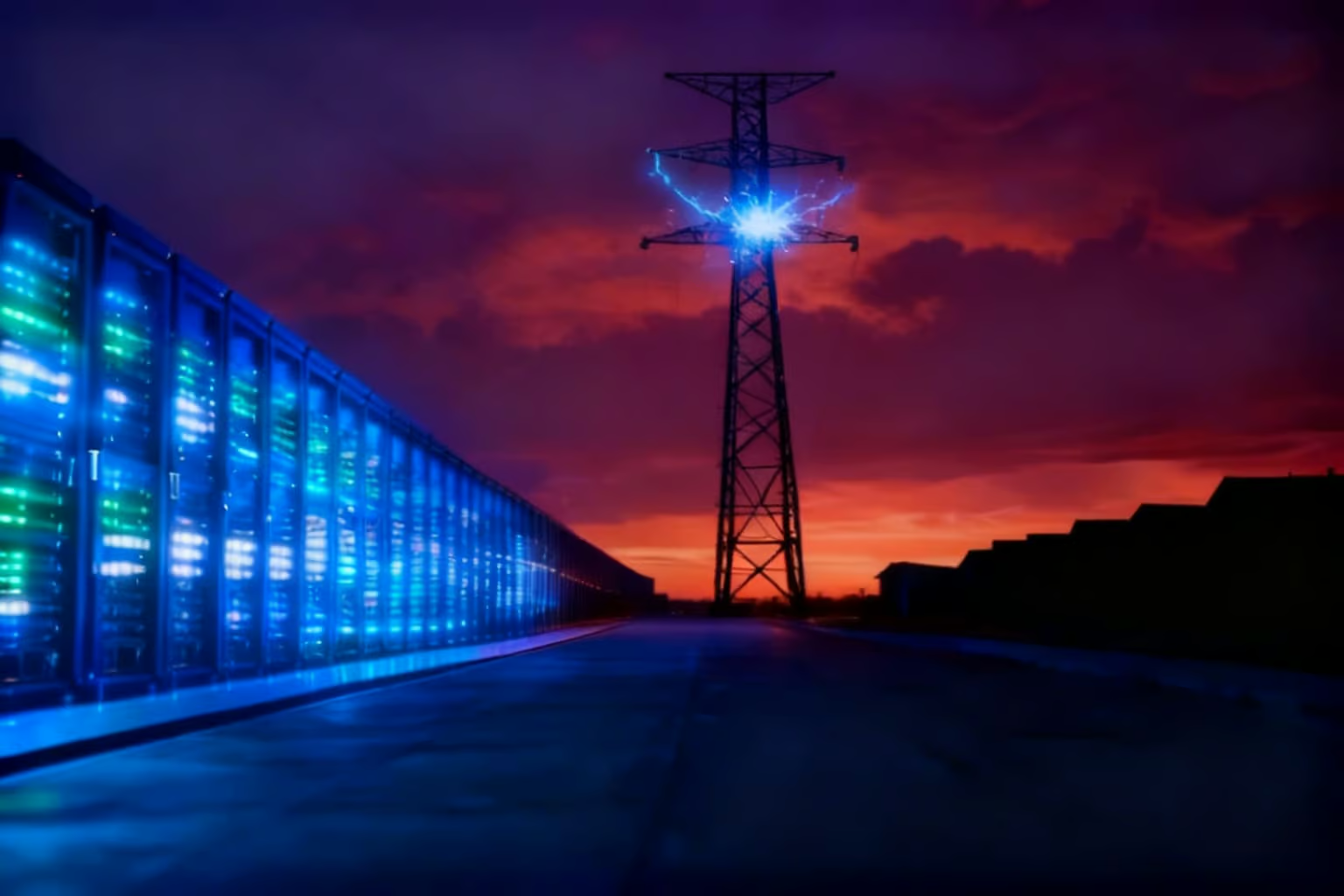
The Eastern Interconnection, the largest synchronized power grid in North America, is projected to run out of its deepest tier of emergency peak power reserves by June 2027. Once that final buffer is gone, grid operators will have no choice but to start shedding load through controlled rotating outages during the worst summer demand peaks. The finding comes from recent energy reliability analysis tracking how the reserve margin is shrinking year after year as coal and nuclear plants retire faster than new dispatchable generation comes online, while demand keeps climbing from data centers and electrification.
Why the Reserve Margin Matters for Site Owners
The Eastern Interconnection stretches from the Great Plains to the Atlantic seaboard, carrying power to factories, hospitals, data centers, and millions of homes. Operators maintain several reserve tiers to keep the system stable. Emergency peak reserves sit at the bottom of that stack and are used only when extreme heat, a major plant trip, or another stressor threatens to push demand past supply. Once those reserves are gone, the grid is one unplanned outage away from cascading failures that cross state lines.
For anyone running an online business, the implication is direct. If a rolling blackout hits a region where your servers, payment processors, or SaaS vendors operate, customer-facing services stop responding and revenue stops flowing. The June 2027 forecast turns a distant infrastructure concern into a planning problem that belongs on a technical SEO and operations checklist today.
How the Numbers Got This Tight
The headline projection is straightforward: June 2027 is the expected month when emergency peak reserves reach zero under a typical summer demand curve. Three pressures are doing the work behind that date.
- Retiring baseload. Older coal and nuclear units are leaving the system faster than replacements are being built.
- Slow additions of dispatchable generation. Gas, hydro, and other plants that operators can call on demand are coming online at a pace that lags consumption growth.
- Climbing load from data centers and electrification. AI training facilities, crypto sites, EV charging, and building electrification are pushing peak demand higher every summer.
Each summer eats into the buffer a little more. By June 2027, the arithmetic no longer leaves headroom for an additional surprise.
What Grid Operators Will Likely Do Next
Utilities and federal regulators are expected to push faster permitting for fast-ramp generation and grid-scale battery storage, expand demand response programs that pay large customers to curtail usage during tight hours, and revive transmission projects that can import power from regions with surplus capacity. Most of those projects take years to clear planning and construction, so the near-term lever is interruptible-rate tariffs that compensate commercial and industrial customers for agreeing to drop load when called.
The conflict is already playing out locally. In Sterling, Virginia, neighbors filed complaints over the noise and emissions from backup generators at a Vantage Data Center facility, a sign that on-site power built to defend against grid fragility is itself becoming a quality-of-life issue. Expect more disputes of this kind as digital infrastructure scales faster than the grid underneath it.
What to Audit on Your Own Stack Before Summer 2027
Treat the reserve projection the way you would treat a Core Web Vitals regression: measure, prioritize, and fix the worst exposure first. A useful audit walks four layers.
1. Map Your Dependency Geography
Identify every provider in your stack that runs inside the Eastern Interconnection: your hosting region, your CDN POPs that serve U.S. traffic, your payment processor’s primary data centers, your DNS anycast nodes, and the home offices of remote team members. Anything in that footprint is a candidate for a rotating outage. For each, note whether the provider publishes a multi-region failover option and whether your contract gives you a service level credit when uptime targets are missed because of regional power events.
2. Review Your Uptime and Incident Response Assumptions
Most status pages assume a software or network failure. A rolling blackout looks like a simultaneous, multi-hour outage that affects your office, your staff’s homes, and your provider’s data center at once. Update your incident runbook to include a power-loss scenario: who has authority to declare an outage, what gets communicated to customers, and which non-essential workloads get shut down first to extend UPS runtime.
3. Check the Physical Layer You Control
If you operate your own server room or a small on-prem cluster, a properly sized uninterruptible power supply bridges the gap between a grid drop and a generator spinning up. Confirm the UPS has been load-tested in the last 12 months, that the transfer switch is set to generator mode, and that fuel reserves cover at least 24 hours at expected load. Replace any battery that shows swelling or that has passed its service date.
4. Pressure-Test Cloud and Colocation Contracts
For AI inference or training jobs that cannot be paused mid-run, ask your cloud provider for documentation of their data center backup power architecture, the duration their fuel reserves are designed to cover, and whether multi-region deployment is available for your workload tier. If the answers are vague, treat that as a finding in your next vendor review and price out a colocation facility with dedicated power feeds as a secondary site.
How This Connects to Broader Site Reliability Work
Site reliability conversations usually focus on caching, rendering, and dependency health. The June 2027 reserve projection adds a fourth axis: the physical grid that feeds every rack your service depends on. Crawl budgets, schema coverage, and link audits will not help if a rotating outage takes your primary region offline during a product launch or a search-driven traffic spike.
Operators that build a layered power resilience plan now, combining UPS, on-site generation, multi-region replication, and a tested communication tree, will be the ones still serving traffic when the reserve margin finally hits zero. The Eastern Interconnection has been a background utility for decades; starting in 2027, it is a variable you have to plan around.
FAQ
What is the Eastern Interconnection?
The Eastern Interconnection is the largest synchronized power grid in North America, covering most of the United States east of the Rocky Mountains and extending from the Great Plains to the Atlantic coast. It connects thousands of generating plants through high-voltage transmission lines, with operators coordinating continuously to balance supply and demand across the region.
What are emergency peak reserves?
Emergency peak reserves are the deepest tier of backup capacity that grid operators can deploy. They sit below spinning reserves and contingency reserves and are activated only after every other measure has been used during an extreme demand event. If those reserves are exhausted, operators must begin controlled rolling blackouts to prevent a wider system collapse.
How should site owners prepare for possible rotating blackouts?
Audit which parts of your stack live inside the Eastern Interconnection, confirm UPS and generator readiness for any on-prem equipment, review cloud and colocation contracts for backup power guarantees and multi-region failover, and update your incident response runbook to include a multi-hour power-loss scenario that affects both staff and providers at the same time.