

A year-long study of more than 75,000 websites found that bad bot traffic grew 124% between July 2025 and June 2026, while human traffic grew only 13.2%, and nearly two-thirds of tested sites could not detect any of the simulated automated visitors used in the research.
Key findings from the DataDome State of Bot Agent Security Report 2026
Bots and AI agents generated roughly 26.5% of all traffic in the dataset. Bad bots drove most of the shift, and AI-related traffic grew more than six times faster than human traffic over the same period. Web scraping dominated the bad-bot category at 70.9%, followed by credential stuffing, scalping, spamming and DDoS activity.
The study reported sharp rises in scraping, scalping, spamming and DDoS activity during the 12-month window. Credential stuffing remained flat on a yearly basis but followed a recurring pattern: high-volume bursts, a quiet period to refresh stolen credentials and rotate infrastructure, then a return to full scale.
What kinds of bots are doing the most damage
A 30-day sample of bad bot traffic showed three operational tiers:
- Simple bots formed the largest share. They require little effort and still work against sites with limited bot protection, and are used for scanning, reconnaissance and attacks on easier targets.
- Average-complexity bots rely on browser automation frameworks that mimic parts of a legitimate browsing session. Operators use them for scraping, fake-account creation and credential testing.
- Advanced bots are kept apart from basic scripts so a campaign is not exposed through simple automation signals.
Some campaigns combine simple and average techniques, starting with basic automation and switching to more convincing browser simulation when needed. Browser-side signals alone cannot provide complete coverage. Attackers can suppress or imitate those signals, and traffic hitting APIs, mobile endpoints or server-side services may never run client-side code.
AI agents are reaching login pages and payment flows
Monthly AI bot traffic to login pages increased more than eightfold during the first half of 2026. The rise reflects assistants that handle tasks users used to do themselves, including checking orders, retrieving account information and supporting purchases.
Login pages, shopping carts, payment pages and forms are now overlapping targets. The same login form serves a legitimate assistant retrieving an order and a bot testing stolen credentials. A shopping cart can be manipulated to reserve inventory or exploit promotions. A payment page attracts card-testing tools. Online forms remain targets for spam, false leads and automated data collection.
One request rarely reveals intent. A single page view looks the same whether it comes from an authorized assistant or from an automated account-abuse campaign. Security systems have to read the sequence, speed, volume and context of each interaction to separate the two.
Malicious software can copy the user-agent string of a recognized AI service and pose as a trusted crawler. An unfamiliar bot can avoid rules written for known services, so existing allowlists provide limited cover.
Why most popular websites still fail basic bot tests
About 65.3% of the popular websites tested failed to detect any of the 10 simulated bots. Only 2.4% stopped or challenged every type. The tests covered simple scripts, bots posing as recognized AI services, tools with forged browser fingerprints and automated versions of real browsers. Requests were sent through residential internet addresses in the United States, Canada and France.
Large organizations may have substantial security budgets, but complex infrastructure and disconnected tools can leave gaps.
Testing focused on the homepages of 21,491 popular websites. Some protections may run only on login, account or payment pages and were outside the scope of the homepage tests, so the failure rate is a floor, not a ceiling. Traffic classified as an attack in the dataset represents an attempted action, not a successful breach or a financial loss.
What defenders need to do next
Binary allow-or-block decisions cannot tell a legitimate AI assistant from a credential-testing bot, so protection has to move to behavior and context. That means reading session patterns, request sequences, fingerprint consistency, and how each visitor uses JavaScript, cookies and headers across pages, not just on the homepage.
For teams running large sites, the practical starting points are the highest-value endpoints (login, account, checkout and forms), residential IP reputation, fingerprinting that survives automation, server-side checks for API and mobile traffic, and a tested response plan for credential-stuffing surges. Where ongoing measurement matters, a tool such as SEOScanPro runs a full technical audit of a site and shows the measured result behind every check, including bot-access signals and agent-readiness.
FAQ
How fast is bad bot traffic growing compared with human traffic?
Bad bot traffic grew 124% between July 2025 and June 2026, while human traffic grew 13.2%, a ratio of roughly nine to one.
What is the most common type of bad bot attack?
Web scraping accounted for 70.9% of bad bot traffic in the dataset, followed by credential stuffing, scalping, spamming and DDoS activity.
Can most popular websites detect automated bots?
About 65.3% of the 21,491 popular websites tested failed to detect any of the 10 simulated bots, and only 2.4% stopped or challenged every type.
Try the site audit tool
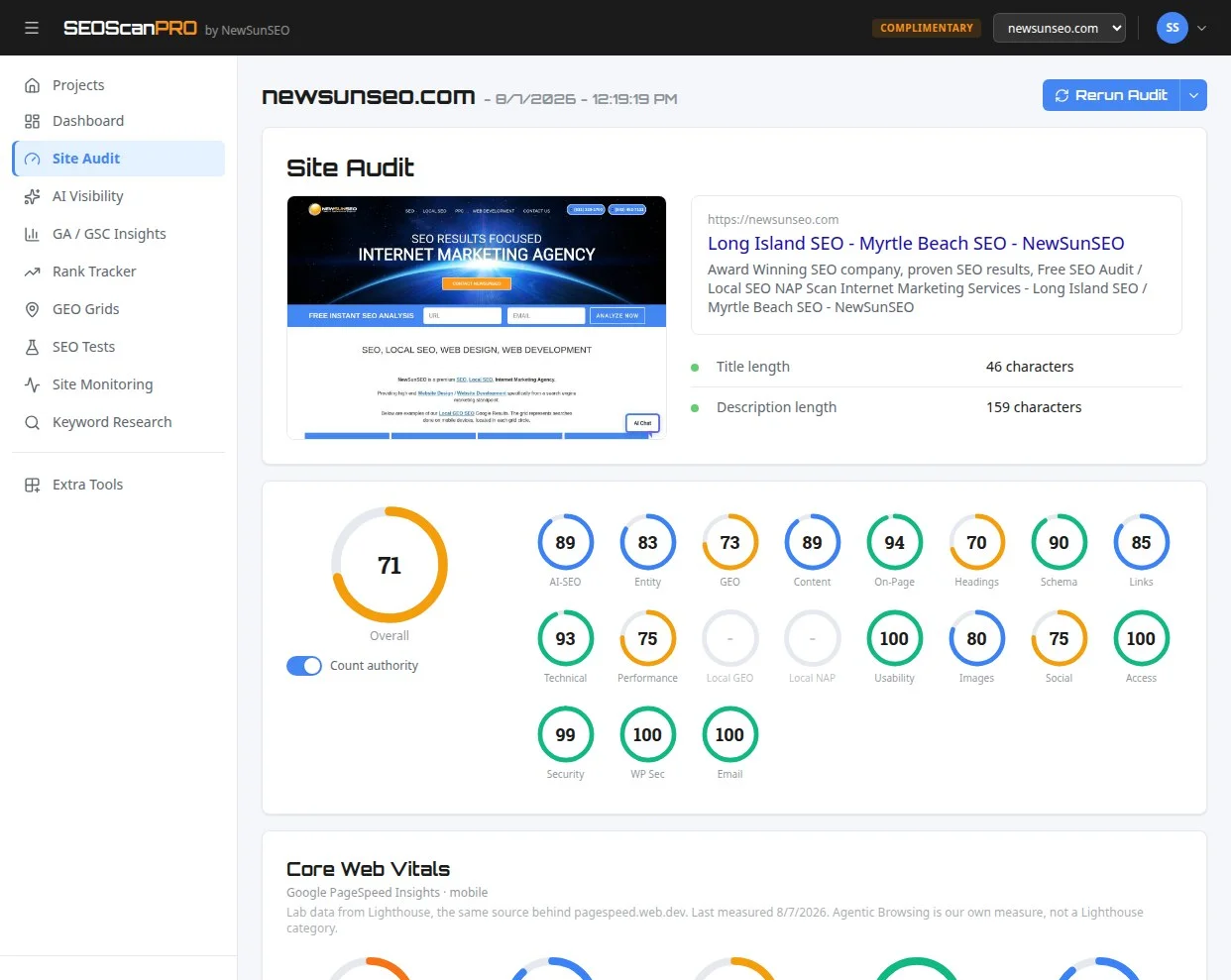
SEOScanPro runs a full technical audit of a site and shows the measured result behind every check. Open the site audit tool.