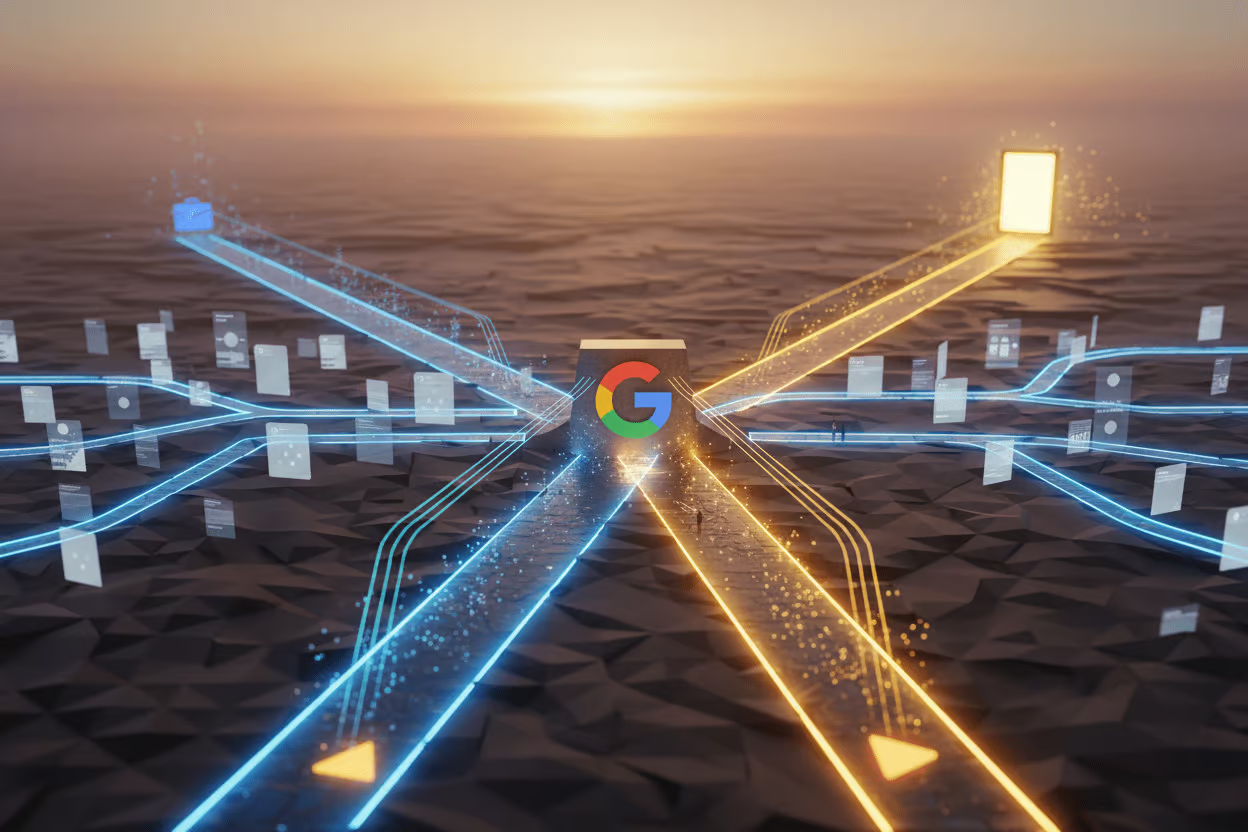
When Google surfaces an answer directly, how often does a user actually leave the page to visit a third-party site? A new analysis from seoClarity puts a number on it. Across 1.5 million anonymized search sessions logged in April 2026, AI Mode held users in conversation for almost three times longer than AI Overviews while cutting external clicks to less than a third. For anyone tracking referral traffic, the gap between these two AI surfaces is now the gap to plan around.
What the study measured
Researchers at the SEO platform seoClarity compared two session types side by side: searches that triggered an AI Overview sitting atop a traditional results page, and searches conducted entirely inside AI Mode, the fullscreen chat interface Google introduced as an opt-in experiment in early 2026. The dataset captured session duration, follow-up query count, external click-through behavior, and query category for each session.
Both interfaces draw on similar underlying language models, so the contrast in user behavior comes down to interaction design rather than answer quality. That distinction is the one worth understanding before changing a content strategy.
The click-out gap
External click-through behavior is where the two surfaces diverge most sharply. Sessions that included an AI Overview recorded a 12% click-out rate to third-party sites. Sessions inside AI Mode produced a 4% click-out rate, a threefold reduction. Median source clicks per session followed the same pattern: 1.4 for AI Overviews, 0.3 for AI Mode.
Even with citation links present, the conversational interface keeps the user asking the next question rather than opening a new tab. That single behavioral pattern reframes what a top placement inside an AI summary is actually worth.
How long users stay and how deep they go
AI Mode sessions averaged 3 minutes 12 seconds. AI Overview sessions averaged 1 minute 8 seconds. The extra time corresponds to follow-up activity: AI Mode users typed an average of 2.8 additional queries per session, building a multi-turn thread instead of a single search-and-leave action.
Query intent also split along predictable lines. Roughly 62% of AI Mode queries were informational or exploratory. Transactional and navigational searches still gravitated toward the classic results page beneath AI Overviews, where product listings, local packs, and direct site links remain visible.
What an audit of your own pages should now check
Reading the study as a site operator turns the findings into a checklist. A few items deserve a fresh look the next time you run a technical audit.
Track AI Overview impressions and clicks separately in Search Console
Google has begun reporting AI Overview impression and click data as its own line in Search Console. Pull that report, filter to the last 90 days, and compare click-through rate against your non-AI queries. A page that historically pulled a 4% organic CTR may show something different when an AI summary sits above it, and that delta is the real signal worth watching.
Audit your citation readiness
AI Overviews still link out, so source credibility still matters. Crawl your top 20 pages and check whether each one includes clear author bylines, primary source links, structured headings, and a publication or update date. Pages missing those elements are less likely to be chosen as a citation source, which directly affects the 12% click-out pool.
Confirm your brand entity is machine-readable
AI Mode rarely clicks out, but it still names brands when answering. Search for your brand name in a knowledge graph viewer, then check that your company name, address, leadership, and product lines match across your site, Wikipedia, Wikidata, Crunchbase, and major directories. Inconsistent entity data is a quiet reason an LLM mentions a competitor instead of you inside an AI Mode reply.
Map content to query intent, not just keywords
The study found informational and exploratory queries dominant in AI Mode and transactional queries dominant in the standard SERP. Run your existing pages against an intent classification and split them: informational guides should be optimized for inclusion in AI answers, while product, pricing, and location pages should be optimized for the classic results that still drive clicks.
Watch the ad roadmap
Google has started testing ad placements inside AI Mode. If you currently buy branded search ads, revisit whether the same spend will reach users inside a chat surface. A paid placement inside AI Mode may soon be the only paid way to interrupt a conversational thread that never clicks out.
Why the divergence is structural, not temporary
It is tempting to file the click-out gap under “early product behavior” and assume users will start clicking more once they learn the interface. The study’s session length and follow-up data push against that read. Users are not bouncing off AI Mode; they are staying and refining. Each follow-up replaces what would have been a new search on Google, let alone a visit to another site. That substitution effect, not unfamiliarity, is what suppresses outbound clicks.
Internal roadmap reporting suggests AI Mode could become the default mobile entry point for broad informational queries later in 2026, with AI Overviews continuing to anchor the desktop layout. If that rollout happens, the 4% click-out figure is the one to plan around, and the audit checklist above is the practical bridge.
FAQ
What is the difference between AI Mode and AI Overviews?
AI Overviews are an AI-generated summary that appears at the top of a standard Google results page, with linked citations and the traditional blue links still visible below. AI Mode is a separate chat-style interface that opens a fullscreen conversation and answers follow-up questions without showing a classic results page.
Do users click on websites more from AI Overviews or AI Mode?
Users click out far more often from AI Overviews. The seoClarity study found a 12% external click-out rate for AI Overview sessions, compared with 4% for AI Mode sessions. Median source clicks per session were 1.4 for AI Overviews and 0.3 for AI Mode.
How long do users stay in AI Mode compared with AI Overviews?
AI Mode sessions averaged 3 minutes 12 seconds with 2.8 follow-up queries per session. Sessions involving an AI Overview averaged 1 minute 8 seconds. The longer time in AI Mode reflects multi-turn refinement rather than a single search action.