
Shared AI chat pages can stay hidden from search engines when site owners set the right technical controls, and a recent indexing incident showed exactly what happens when those controls are missing. A large batch of shared Claude conversations appeared in Google search results because the hosting environment was not blocking crawlers from the shared conversation pages.
The incident is a useful reminder that any page a site serves to the public can be picked up by search engines, including pages generated dynamically by AI systems, unless the site owner takes explicit steps to keep them out of the index. For any business publishing AI generated pages, transcripts, summaries, or interactive tools, the same technical SEO mistake that caused this incident is a real risk today.
What actually happened
Shared AI chat conversations were being served on public URLs. Google discovered those URLs, crawled them, and added them to its search index. Anyone searching with very specific conversational phrases could land directly on a private conversation that one user had chosen to share.
The conversations themselves were not leaked from a secure backend. They were sitting on normal web pages that any crawler could read. When a user clicks share on a chat, most AI chat products generate a unique, publicly reachable URL. That URL behaves like any other webpage on the open internet. If the site serving the URL does not tell search engines to stay away, search engines will treat it like a regular page and rank it for whatever words appear on it.
The technical SEO mistake, in plain terms
There are three layers that all need to be in place for a page to stay out of Google. Missing any one of them is enough for the page to be indexed.
- robots.txt rules for the path that serves shared pages. The robots.txt file is the first thing crawlers check. If shared conversation URLs live under a path like example.com/share/ or example.com/c/, that path should be disallowed for major user agents such as Googlebot. If robots.txt does not block the path, crawlers are free to fetch every shared conversation URL.
- A noindex directive on each shared page. Even when a path is blocked in robots.txt, the safer practice is to also place a noindex meta tag or an X-Robots-Tag header with noindex on every shared conversation page. Search engines honor noindex when they see it on a page they managed to crawl.
- Authentication or a hard access wall. Shared pages can be placed behind a sign in step, a confirmation screen, or a token check so that crawlers, which do not sign in, never reach the content. This is the strongest safeguard because the crawler cannot index what it never receives.
Reports on the Claude indexing event indicate that the shared chat URLs were crawlable and the pages carried enough on page text for Google to treat them as normal results. That is a textbook indexable page from a search engine point of view, regardless of what the conversation is about.
Why AI generated pages are a special case
AI tools create a flood of new URLs in a way traditional content management systems do not. Every shared conversation, every AI generated landing page, every product draft, every generated FAQ, and every run of an internal tool can spin up its own addressable URL. Most of those URLs are low value, many are duplicates of one another, and some contain sensitive content. Treating them as normal indexed pages pollutes the index, can pull junk into a site’s search presence, and in cases like the shared chat incident, exposes content the publisher never meant to surface in search.
For any business using generative AI to produce customer facing pages, the indexing surface is now much larger than the editorial team thinks. Every dynamic output is a potential indexed URL.
What site owners should do right now
Audit the URLs your AI tools create
Run a list of every URL pattern generated by AI tooling, including shared chats, generated landing pages, drafts, previews, and any path served through a query string. Confirm whether each pattern is currently indexed using a site: search and a log file review. Any URL pattern that is indexed and should not be is the first thing to fix.
Pick a containment strategy per URL pattern
For shared chat style URLs, the safest approach is to put them behind a confirmation gate and mark every served page noindex. For draft and preview URLs that the public never needs to see, block the entire path in robots.txt and require authentication. For AI generated marketing pages meant for indexing, publish only the approved ones and noindex the rest until they have been reviewed.
Add noindex at the template level
The noindex directive should be a default on every template that serves shared conversations, drafts, or previews. Relying on an editor to remember to toggle it for each page is what causes these incidents.
Verify the fix
After a change, fetch a sample URL as Googlebot to confirm the robots header or meta tag is being served. Then request removal of the already indexed URLs through Google’s removal tool and watch coverage reports to confirm no new versions slip in.
Lessons that go beyond chat sharing
The shared chat incident is a specific case of a general problem. Any system on a site that produces publicly reachable URLs carries an indexing risk. Pre release versions of pages, internal search results, faceted navigation filters, user generated content, customer support transcripts, and AI assistant outputs all fit the same pattern. The fix in each case is the same combination of robots.txt, noindex, and access control, applied as defaults rather than as afterthoughts.
For businesses trying to understand how their own dynamic pages currently appear to search engines, a technical audit that maps every crawlable URL pattern and shows the indexing status of each one is the place to start. SEOScanPro runs that kind of audit and surfaces the indexing status of URL patterns so the gaps are visible before a search engine exposes them.
FAQ
Why did shared AI chats show up in Google?
The shared chat URLs were publicly reachable and were not blocked from crawling or tagged as noindex, so Google treated them like normal web pages and added them to its index.
Are private AI chats actually private from search engines?
A chat is only as private as the URL it lives on. If the URL is reachable without authentication and is not blocked in robots.txt or marked noindex, search engines will treat it like any other public page.
What stops AI generated pages from being indexed?
A combination of blocking the URL path in robots.txt, placing a noindex meta tag or X-Robots-Tag header on every shared page, and putting the page behind an access wall so crawlers cannot fetch it in the first place.
Try the site audit tool
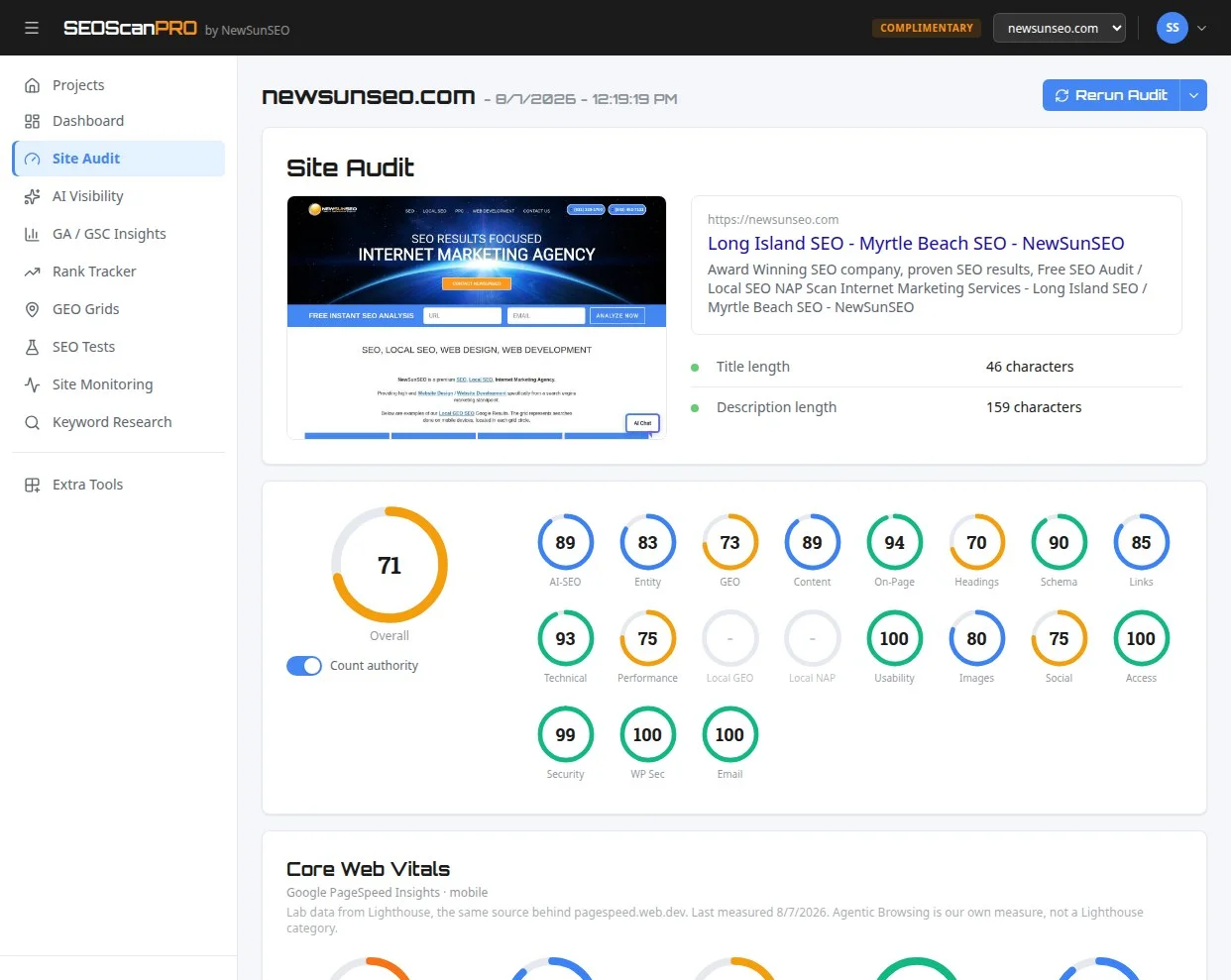
The site audit tool runs a full technical audit of a site and shows the measured result behind every check. Open the site audit tool.
This article summarizes reporting from searchengineland.com.