A Gallup survey released on Wednesday found that 71% of Americans are somewhat or strongly opposed to AI data centers in their own communities, while only 53% would oppose a nearby nuclear power plant. The gap matters because data centers now rival small cities in electricity and water consumption, and the resulting grid and regulatory pressure is starting to ripple into the pages and products that depend on them.
Why local opposition is climbing above nuclear levels
The poll reports that 70% of respondents worry to some degree about the environmental footprint of facilities built to train and run AI models. Among those who oppose a nearby data center, half cite resource concerns: water withdrawal, energy demand, and the conversion of farmland or wildlife habitat. Another quarter point to quality-of-life issues such as higher utility bills and a broader rise in the cost of living. Only 7% of those surveyed strongly favor local construction, with another 20% somewhat in favor, and those supporters name job creation, tax revenue, and local economic growth as their reasoning. Opposition runs across most demographic and political lines, with women and Democrats far more likely than Republicans to strongly oppose new builds.
Where the new scale comes from
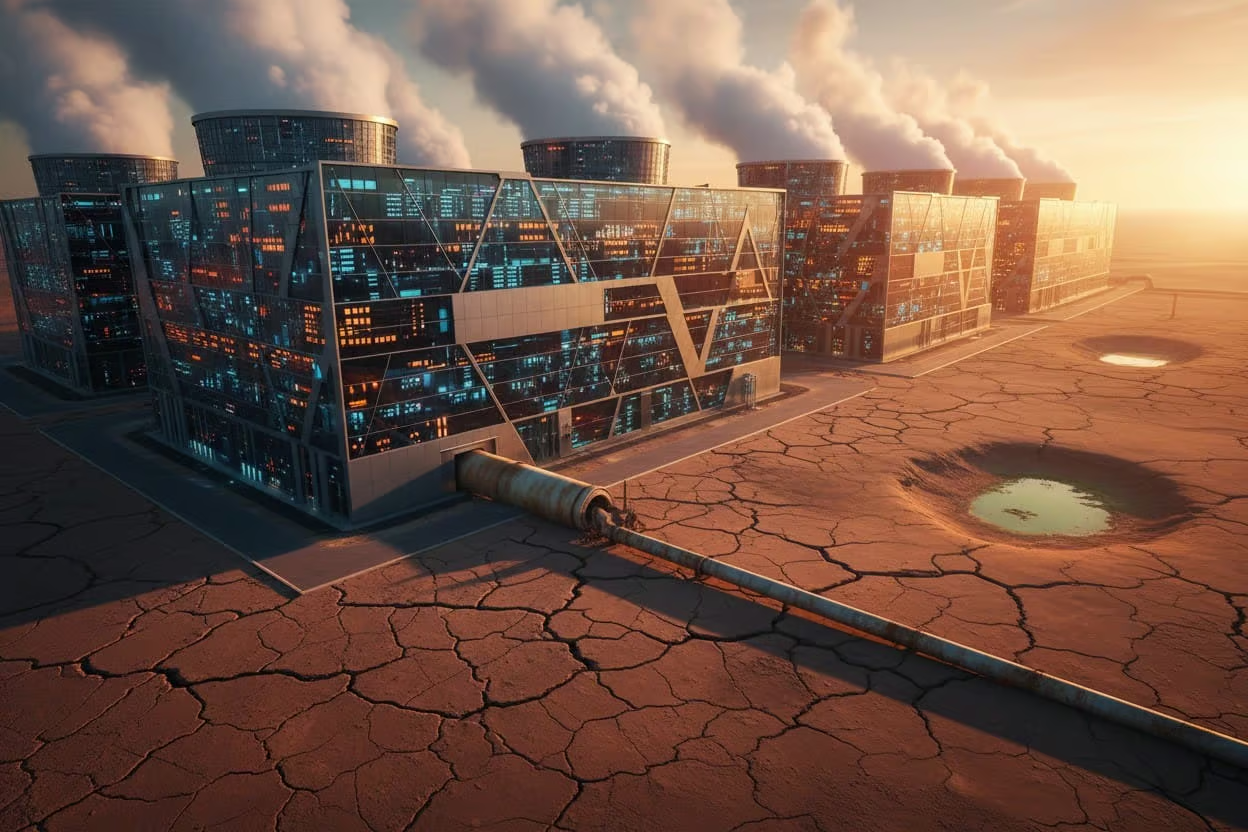
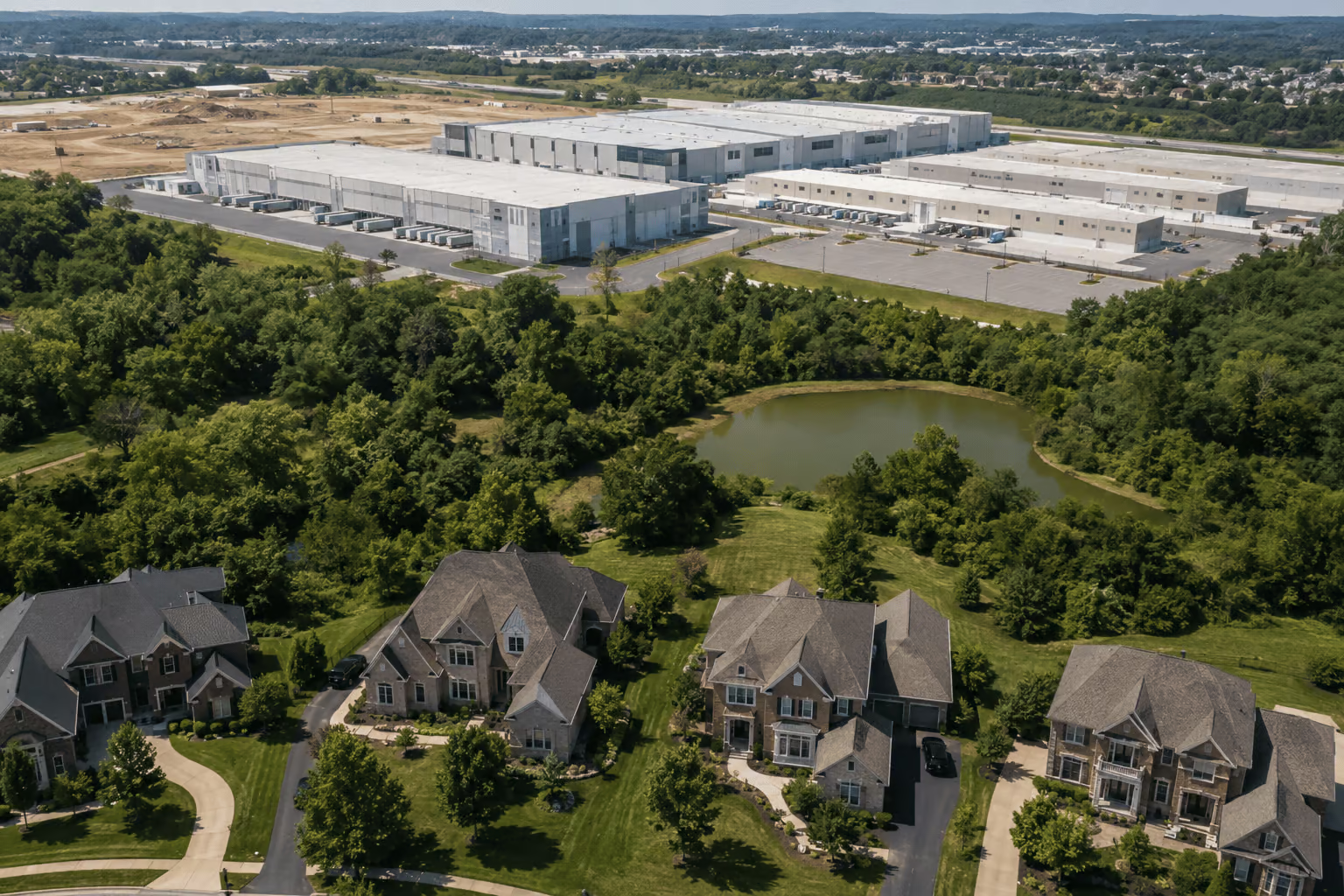
Traditional data centers that served internet and cloud workloads typically occupied around 100,000 square feet. AI campuses are a different category: multi-million-square-foot sites on hundreds of acres, packed with hundreds of thousands of graphics processing units. Their combined demand for computing, cooling, and storage has been compared to the energy use of hundreds of thousands of households. Water use is similarly outsized, with large facilities drawing on the order of five million gallons per day, comparable to a town of 10,000 to 50,000 residents.
States, projects, and the names behind the buildout
Construction is concentrated in Texas, Virginia, and Georgia, with major projects underway from OpenAI, Oracle, SoftBank, Amazon, and Microsoft. Northern Nevada has become one of the fastest-growing corridors, with facilities built or announced by Google, Microsoft, and Apple. The Lake Tahoe region illustrates the tension directly: roughly 50,000 residents have been told that NV Energy will stop serving them in 2027 so the utility can redirect that capacity to data centers nearby, leaving affected households until next May to find a new electricity provider.
What site owners and auditors should actually check
Public resistance changes what a technical SEO or sustainability audit should look at, because the same friction shows up in performance, compliance, and trust signals on the pages themselves.
Electricity source and carbon claims on the page
If a site markets a product as low-carbon, cloud-based, or green-hosted, verify the claim. Look for an emissions report or a real PUE figure linked from the page rather than a slogan in the hero section. Cross-reference any renewable energy contract against the host’s published regional grid mix, since data center buildouts in coal- or gas-heavy regions can quietly undermine a marketing claim.
Water disclosures for AI-adjacent products
Pages that promote AI features now face an audit question their predecessors did not: how much water does inferencing a query consume, and where does that water come from? If a product page is silent on water use while a regional utility is allocating capacity to AI customers, that silence becomes a liability. Check whether the company publishes a water-use effectiveness (WUE) figure per region, and whether the marketing copy aligns with the disclosed number.
Performance budgets against grid instability
When utilities redirect power away from residential customers, latency in the surrounding region can spike during peak hours. Run synthetic audits from nodes in the same ISO or balancing authority as the target audience, and watch Core Web Vitals during evening windows when household demand competes with data center draw. A page that loads in 1.2 seconds in a lab test can fall apart under real local load.
Structured data for organization, funding, and permits
Local opposition creates a rich ecosystem of news, council minutes, and environmental impact statements. If a brand is tied to a contested buildout, audit the Organization, FAQPage, and NewsArticle structured data to ensure official statements surface before opinion pieces do. Misaligned schema can let third-party coverage dominate the knowledge panel while the company’s own clarifications sit several scrolls below.
Third-party scripts and tracking weight
Data center electricity pressure has pushed several large platforms to throttle non-essential features or move to lighter inference stacks. Review third-party tags that depend on heavy remote calls, and flag analytics or personalization scripts that now run on degraded infrastructure. A tag manager audit that focused on vanity metrics last year may now be flagging real carbon and cost.
What the demographics say about messaging
Because opposition cuts across political lines but is stronger among women and Democrats, generic community-pushback framing on a landing page will not land uniformly. Audit copy for tone assumptions and make sure claim substantiation matches the audience reading the page. A site that speaks to datacenter-hosting communities needs sourcing that survives scrutiny from local press; a site that speaks to enterprise buyers needs sourcing that survives scrutiny from procurement.
The bottom line for audits
AI data centers are no longer a back-end story. The Gallup numbers, the multi-million-square-foot scale of new campuses, and the redirection of residential power in places like northern Nevada mean that audits now have a new mandatory section: energy source, water disclosure, regional performance, and the structured data that ties a brand to a contested facility. Pages that ignore that section will read as out of date within the next audit cycle.
FAQ
What did the Gallup poll find about local AI data centers?
The poll found that 71% of Americans are somewhat or strongly opposed to AI data centers in their local communities, compared with 53% who would oppose a nearby nuclear power plant.
Why are Americans opposed to nearby data centers?
Seventy percent of respondents cited environmental worries, including electricity and water consumption. Half of those opposed pointed to resource concerns such as water use, energy demand, and loss of farmland or wildlife habitat, while nearly a quarter cited quality-of-life issues like higher utility bills and rising costs of living.
How large are the new AI data center campuses?
Pre-AI data centers typically spanned roughly 100,000 square feet. New AI campuses can cover millions of square feet and hundreds of acres, house hundreds of thousands of graphics processing units, and draw energy comparable to hundreds of thousands of households. Large facilities can also consume around five million gallons of water per day.