
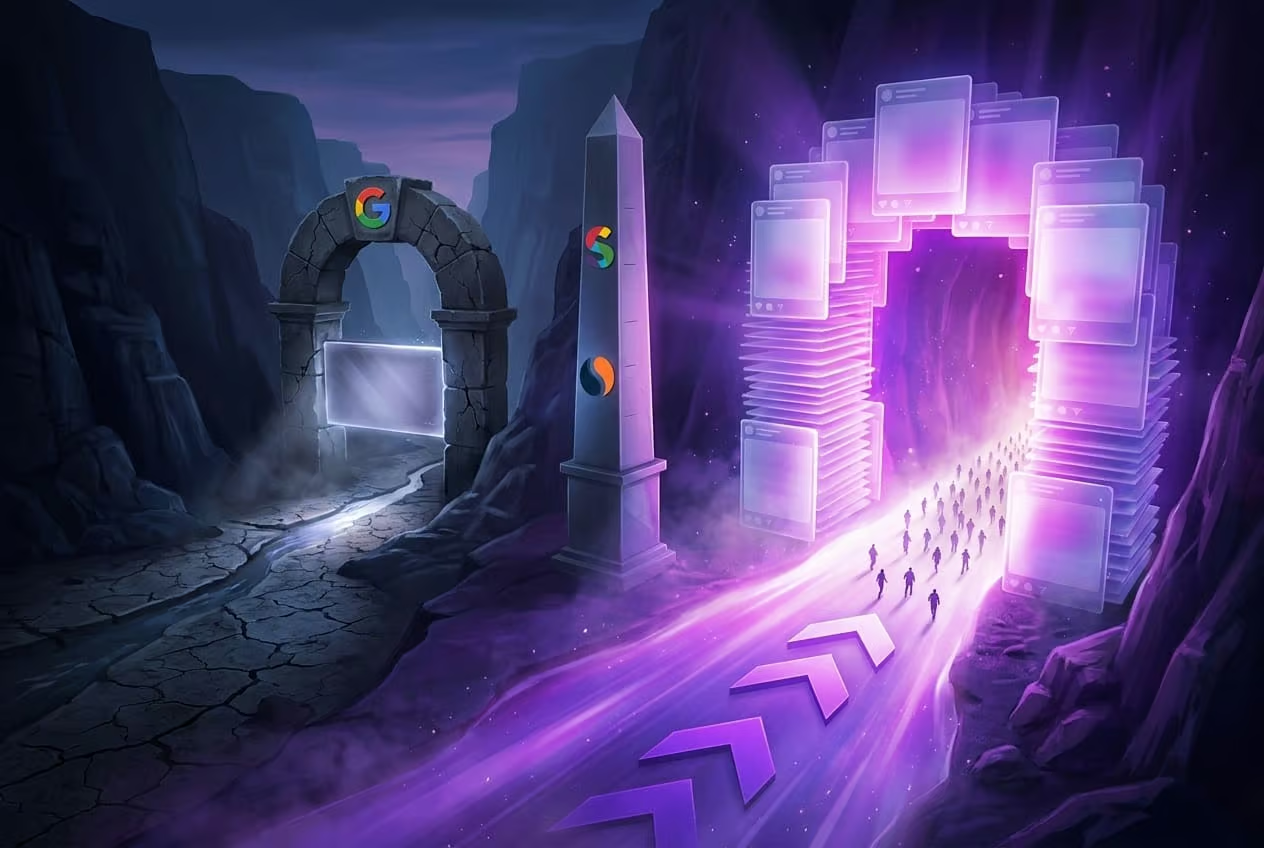
About 68% of Google searches now finish without anyone clicking through to a website, a jump driven by the spread of AI Overviews and the experimental rollout of AI Mode. For anyone running technical SEO audits, the number is not a curiosity. It changes which pages deserve attention, what counts as a win, and which signals to pull from Search Console when you size up a site.
The climb from roughly 50% in 2019 to 65% in 2024, and an estimated 68% by mid-2026, lines up with Google pushing Gemini-synthesized answers into more result types. Knowing why a query no longer sends traffic is the first step to deciding whether anything on the page still needs fixing.
What counts as a zero-click result in 2026?
A zero-click search ends on the results page. Google satisfies the intent with a featured snippet, a knowledge panel, a calculator, a map pack, or, increasingly, an AI Overview that blends several sources into a single block. In AI Mode, an opt-in conversational layer, that block turns into a running chat, and the traditional ten blue links fade into the background.
The shape of the page matters more than ever for audits. A page that ranks first organically but loses the snippet to an AI box can still see meaningful traffic drop, while a page buried on page two may get pulled into an Overview and earn a citation without a click at all.
Which Google features are driving the 68% figure?
Two features do most of the work. AI Overviews pull from multiple pages and generate a snapshot answer above the regular results. AI Mode, introduced as an experiment in early 2026, replaces the link list with a continuous AI conversation that handles follow-ups and comparisons inside the results page.
Google says AI Overviews now appear on hundreds of millions of queries every day across more than 100 countries. Both features are designed for task completion, not referrals. Source pages typically appear as a small carousel or expandable list behind the answer, which means a citation without a click has become a normal outcome for informational queries.
What this means for an SEO audit checklist
When a client asks why organic sessions are flat or falling, the audit now needs to separate ranking performance from answer-engine visibility. A few practical checks to add:
- Citation audit. For each priority query, search it in an incognito window and record whether the page is cited inside an AI Overview or AI Mode reply. Track this over time, not just once.
- Direct-answer formatting. Pages that answer a question in the first paragraph, use concise subheadings, and wrap entities in clear schema have a better chance of being pulled into an Overview. Flag pages that bury the answer below long preambles.
- Entity markup review. Author, organization, and product entities should be explicit and consistent across the site. AI systems lean on these signals to decide which brand to name in an answer.
- Search Console AI reports. Google’s AI Search reports show which pages appear in AI Overviews. Use them as a baseline before recommending changes, then compare after the next crawl and re-index cycle.
- Brand-search lift. If a page earns AI citations, branded search volume often rises weeks later. Track branded queries in Search Console as a lagging indicator of answer-engine wins.
These checks complement traditional audits of titles, internal links, and Core Web Vitals. None of the old work goes away, but it now sits alongside a second scoreboard.
How should site owners measure success when clicks are not the goal?
The old KPI of rank plus click-through rate still matters for transactional pages, but for informational content the targets shift. Useful metrics to add to client reports:
- AI citation share. Of the top 50 queries a page targets, how many trigger an AI Overview that cites the page?
- Share of AI voice. When the brand appears in an Overview, is it the named source, one of several links, or absent? Named mentions correlate with later direct traffic.
- Overview-trigger queries. The count of distinct queries where the page appears inside an AI block, pulled from Search Console.
- Sentiment inside the answer. Whether the AI summary describes the brand positively, neutrally, or with an error that needs correcting.
Tracking these alongside sessions gives a fuller picture than sessions alone, especially on sites where top-of-funnel articles used to carry most of the traffic.
What about the pages that still need clicks?
Not every query should be optimized for an AI citation. Commercial pages, product detail pages, and lead-capture forms still depend on real visits. For these, the audit priorities are unchanged: clean titles, fast load times, valid schema, and content that matches the query closely enough to earn the click.
The trick is knowing which category each URL belongs in. A useful rule of thumb: if the query can be answered in two or three sentences without losing meaning, treat the page as an answer-engine target. If the user needs to see a price, fill a form, or read a long argument, treat the page as a click target and audit it the old way.
Where regulation fits into the roadmap
Discussions in the EU and US about AI attribution and publisher compensation could change the zero-click curve. Any rule that forces prominent source links or revenue sharing would push more clicks back to publishers, but nothing is in force yet. Until then, the audit checklist above is the realistic path.
For site owners, the short version is simple. Clicks are no longer the only signal that a page is working. Audit for citation visibility, track it the way you once tracked rankings, and treat a flat session chart on a well-cited page as a feature of the new search, not a failure of the old one.
FAQ
What percentage of Google searches are zero-click in 2026?
About 68% of Google searches are estimated to end without a click in 2026, up from 65% in 2024 according to SparkToro. The rise tracks the wider rollout of AI Overviews and AI Mode, which answer queries on the results page.
What causes a zero-click search?
A zero-click search happens when the results page fully answers the query through a featured snippet, knowledge panel, instant answer, calculator, map pack, or AI Overview. In AI Mode, follow-up questions are handled in a chat layer on the same page, which removes the need to visit any external site.
How should site owners adjust an SEO audit for zero-click results?
Add a citation audit that checks whether priority pages appear inside AI Overviews for their target queries, review entity markup and direct-answer formatting, and pull data from Google Search Console’s AI Search reports. Pair these new checks with traditional audits of titles, schema, and performance, and track branded search volume as a lagging indicator of answer-engine visibility.